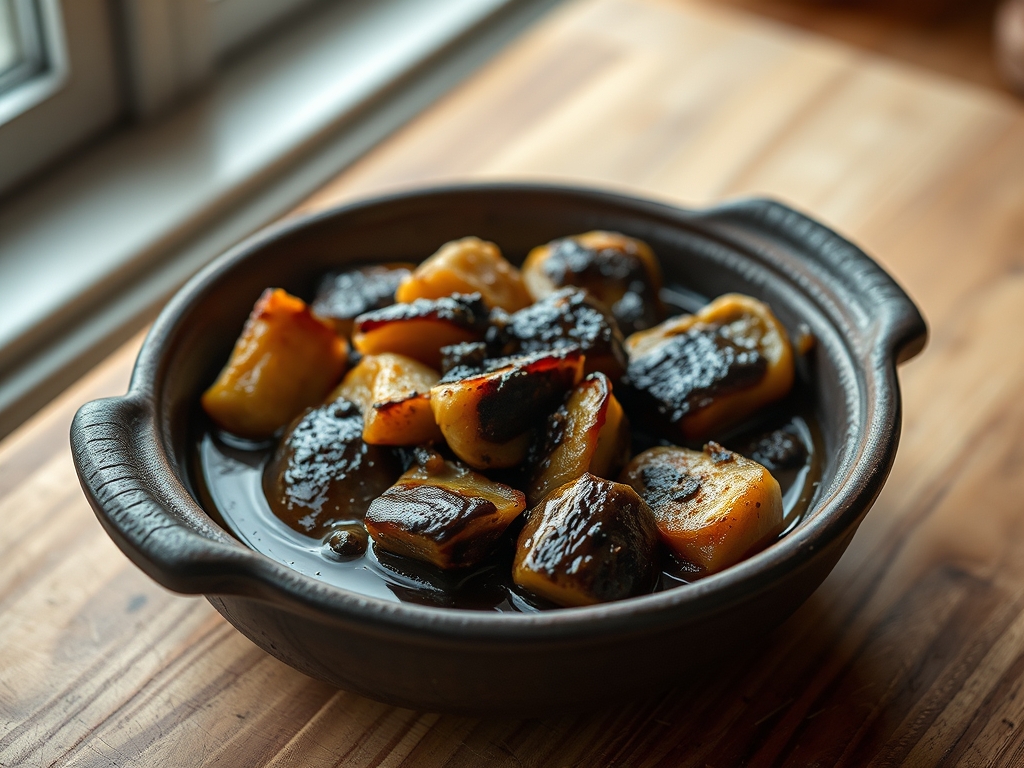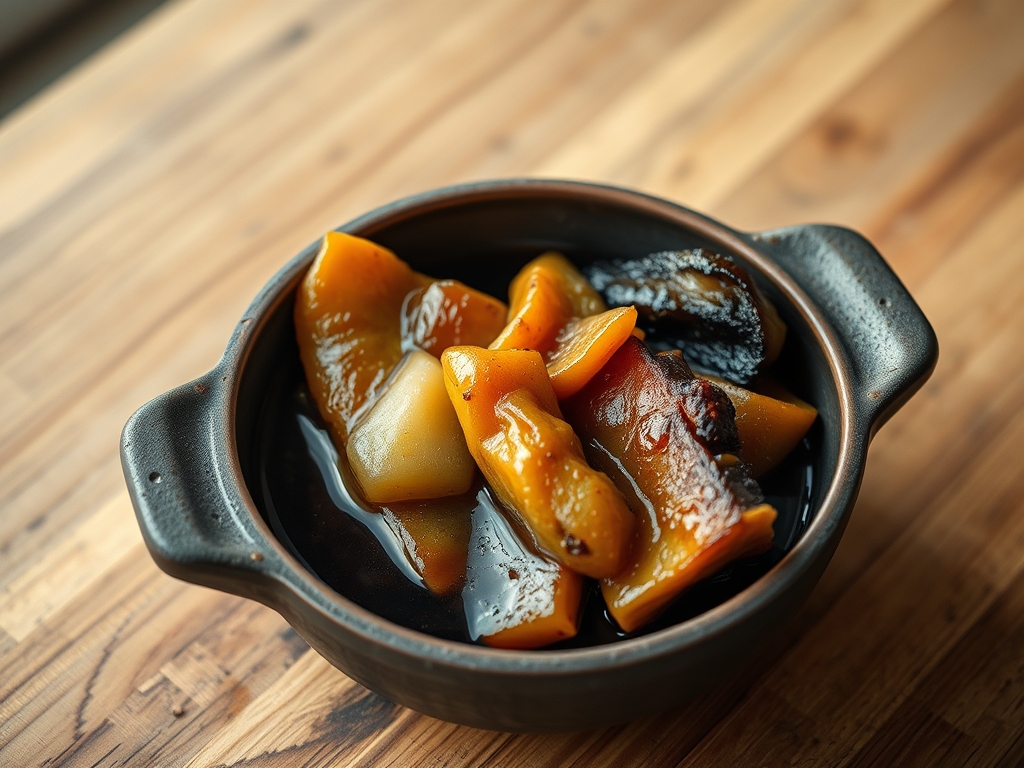
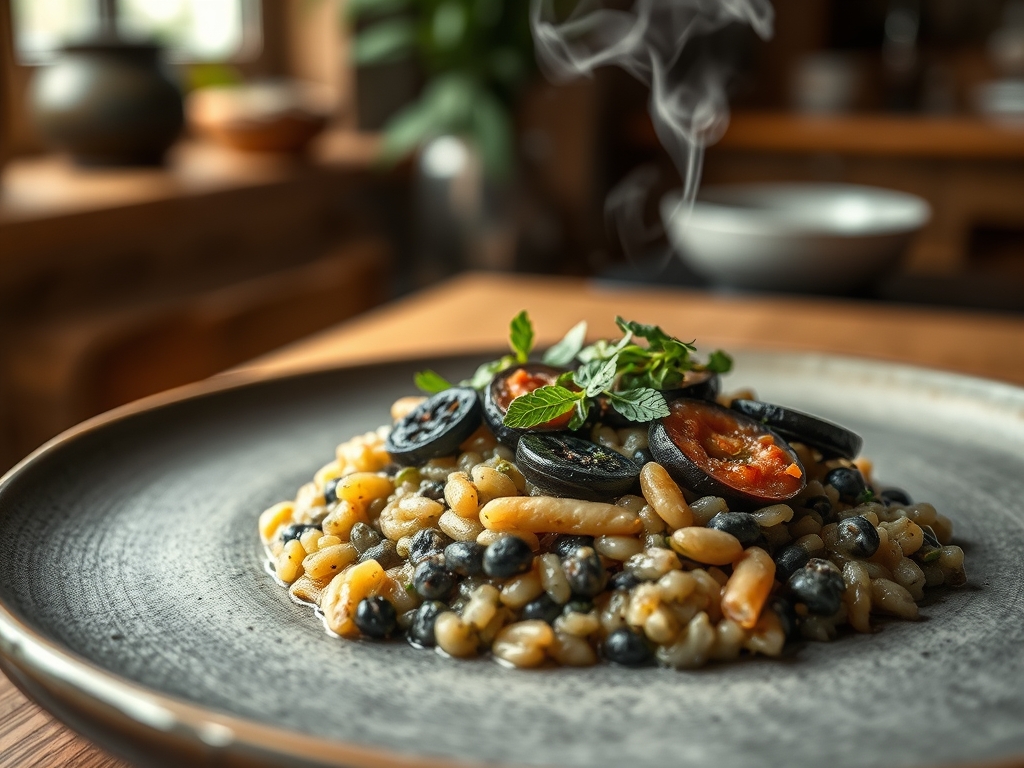
Behold the obsidian crown of the Venetian lagoon. We are not merely cooking dinner; we are engineering a structural masterpiece of starch and cephalopod essence. Squid Ink Risotto is the ultimate litmus test for any culinary infrastructure auditor. It demands respect for the delicate balance of amylopectin release and the deep, briny saturation of melanin-rich ink. When executed with precision, the result is a dish that looks like polished midnight and tastes like the deepest reaches of the Mediterranean. We are looking for a texture that is "all'onda," or wavy, where the rice flows like lava rather than sitting like a stagnant mound of paste. This is a high-stakes game of thermal regulation and mechanical agitation. You are about to transform humble grains into a viscous, jet-black velvet that coats the palate with an intensity that borders on the supernatural. Strap in, calibrate your sensors, and prepare to render the finest dark marine rice your kitchen has ever witnessed. The audit begins now.
THE DATA MATRIX
| Metric | Specification |
|---|---|
| Prep Time | 20 Minutes |
| Execution Time | 30 Minutes |
| Yield | 4 Servings |
| Complexity (1-10) | 7 |
| Estimated Cost per Serving | $8.50 |
THE GATHERS
Ingredient Protocol:
- 320g / 1.5 cups Arborio or Carnaroli Rice (High amylopectin content is non-negotiable)
- 1L / 4 cups High-Quality Seafood Stock (Low sodium to control mineral salinity)
- 150ml / 0.6 cup Dry White Wine (Pinot Grigio or Vermentino)
- 16g / 2 sachets Squid Ink (The pure melanin extract)
- 450g / 1 lb Fresh Squid (Cleaned and sliced into rings)
- 60g / 4 tbsp Unsalted Butter (Chilled for final emulsification)
- 50g / 0.5 cup Shallots (Finely minced)
- 3 cloves Garlic (Microplaned)
- 30ml / 2 tbsp Extra Virgin Olive Oil
- 5g / 1 tsp Lemon Zest (To brighten the deep marine notes)
- To taste Kosher Salt and White Pepper
Section A: Ingredient Quality Audit:
The primary failure point in Squid Ink Risotto is the ink itself. If using jarred ink that has oxidized, the flavor will be metallic rather than briny. To fix this, infuse the ink into a small portion of warm stock before adding it to the pan; this ensures even distribution and checks for "off" aromas. If your rice grains are broken or dusty, you will end up with a gummy porridge. Use a fine-mesh sieve to shake off excess rice flour before starting the "tostatura" phase. Finally, if your seafood stock lacks depth, fortify it by simmering the squid tentacles and a splash of fish sauce for fifteen minutes before you begin the primary execution.
THE MASTERCLASS
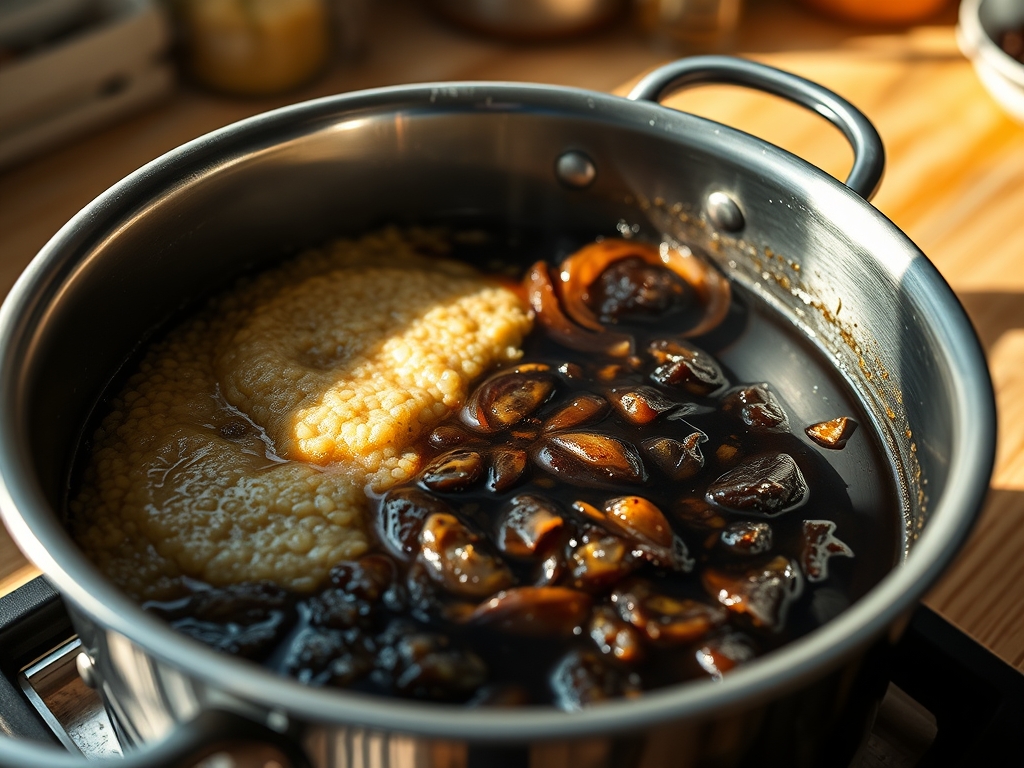
Step-by-Step Execution:
1. The Thermal Foundation
Heat your seafood stock in a dedicated saucepan until it reaches a gentle simmer. Maintain this temperature throughout the process. Using cold stock will shock the rice and stall the starch release.
Pro Tip: Use a digital thermometer to ensure the stock stays between 80C and 85C. This thermal consistency prevents the rice exterior from disintegrating before the core is cooked.
2. The Tostatura (Toasting)
In a heavy-bottomed saucier, heat the olive oil and sauté the shallots until translucent. Add the rice and toast the grains for 2 to 3 minutes until the edges are translucent but the center remains white.
Pro Tip: This step creates a shell around the grain. Use a silicone spatula to ensure every grain is coated in fat; this prevents the rice from becoming "mushy" by regulating the rate of hydration.
3. Acidic Deglaze
Pour in the white wine. Use the liquid to deglaze the bottom of the pan, scraping up any shallot sugars. Stir constantly until the wine is fully absorbed.
Pro Tip: The acidity in the wine breaks down the surface starches just enough to begin the creamy emulsification process. Professional chefs use a bench scraper to keep the sides of the pan clean during this phase.
4. Melanin Integration
Stir the squid ink into your first ladle of stock, then add it to the rice. The grains will immediately take on a deep, obsidian hue. Stir vigorously to ensure the melanin binds to the amylopectin.
Pro Tip: Vigorous stirring is a mechanical necessity. It rubs the grains together, sloughing off starch into the liquid to create a naturally viscous sauce without the need for excessive heavy cream.
5. The Incremental Hydration
Add the remaining stock one ladle at a time. Wait until the liquid is almost entirely absorbed before adding the next. Halfway through, fold in the squid rings.
Pro Tip: Use a digital scale to measure your final butter and cheese additions while the rice simmers. Timing is everything; the squid only needs 3 to 4 minutes to reach a tender, non-rubbery state.
6. Mantecatura (The Emulsification)
Remove the pan from the heat while the rice is still "al dente." Vigorously beat in the chilled butter and a splash of stock. This is the mantecatura phase, which creates the signature glossy finish.
Pro Tip: Beating the fat into the rice off-heat creates a stable emulsion. If the pan is too hot, the butter will "break" and leave an oily film rather than a creamy coating.
Section B: Prep & Timing Fault-Lines:
The most common human error is "The Stagnant Stir." If you do not stir frequently enough, the rice at the bottom will overcook and burst, while the top remains raw. Conversely, if you stir too violently with a metal spoon, you will break the grains. Use a circular motion with a wooden "risotto spoon" (the one with the hole in the middle) to aerate the mixture. If your timing is off and the guests are late, do not keep the risotto on the heat. Spread it thin on a sheet tray to stop the cooking process, then "re-animate" it later with a splash of hot stock.
THE VISUAL SPECTRUM
Section C: Thermal & Visual Troubleshooting:
Referencing the Masterclass photo, your risotto should exhibit a "mirror finish." If the color appears dull or grey rather than jet-black, you likely added too much dairy or the ink was diluted. To fix a dull appearance, finish with a teaspoon of high-quality olive oil to add a reflective sheen. If the texture looks "clumpy" rather than flowing, you have missed the "all'onda" state. Add a tablespoon of hot stock right before plating to loosen the structure. The squid should appear pearlescent against the dark rice; if it looks yellowed, it has been overcooked and the proteins have tightened too much.
THE DEEP DIVE
Macro Nutrition Profile:
A standard serving of Squid Ink Risotto provides approximately 450 calories. It is high in complex carbohydrates and provides a significant dose of iron and antioxidants from the squid ink melanin. The protein content is moderate, primarily derived from the squid and seafood stock.
Dietary Swaps:
- Vegan: Replace butter with a high-quality cashew cream and use a rich mushroom dashi instead of seafood stock. Ensure the "squid ink" is a synthetic vegan version or use black garlic paste for color.
- Keto: This dish is fundamentally starch-based. For a keto alternative, use riced cauliflower, but skip the "incremental hydration" as cauliflower does not release amylopectin.
- Gluten-Free: Naturally gluten-free, provided the seafood stock is not thickened with flour or contaminated with soy sauce.
Meal Prep & Reheating Science:
Risotto is notorious for losing its structure when cooled. The starches retrograde and turn into a solid block. To reheat, add a splash of water or stock to a cold pan, add the risotto, and whisk vigorously over medium heat. This "re-emulsifies" the fats and starches, though the rice will never be perfectly al dente again.
THE KITCHEN TABLE
Why is my risotto crunchy even after 20 minutes?
Your stock was likely too cold or you added it too fast. The exterior of the grain hydrated, but the core remained dry. Maintain a simmer in your stock pot to ensure even heat penetration into the grain center.
Can I use pre-cooked squid?
Negative. Pre-cooked squid will turn into rubberized gaskets during the rice's finishing phase. Always use fresh or high-quality frozen squid and add it during the last few minutes of the cooking process for a tender, buttery snap.
What if I cannot find squid ink?
While the flavor profile will shift, you can substitute with a mixture of finely ground nori and black garlic paste. However, for a true marine infrastructure audit, the authentic melanin of the cephalopod is the only acceptable pigment.
Does the type of wine really matter?
Yes. Avoid "cooking wines" which are loaded with sodium. Use a crisp, dry white that you would actually drink. The acidity is vital for cutting through the viscous nature of the starch and the richness of the butter.