Stop treating your kitchen like a hobbyist's playground and start treating it like a high-performance laboratory. We are here to discuss the absolute structural transformation of connective tissue through the medium of the Beef Brisket Braise. This is not just dinner; it is a tactical operation in collagen denaturation and flavor sequestration. When you stare down a five-pound slab of pectoral muscle, you are looking at a dense network of Type I collagen fibers that require a precise thermal roadmap to reach a state of succulent surrender. The goal is a finished product that maintains its architectural integrity while offering zero resistance to the fork. We are hunting for that specific moment where the fat has fully rendered into a viscous glaze and the aromatics have infused every millimeter of the protein matrix. If you are looking for a quick fix, go find a microwave. If you are looking for a masterclass in culinary physics and deep, piquant satisfaction, then secure your apron and prepare for a full-scale infrastructure audit.
THE DATA MATRIX
| Metric | Specification |
|---|---|
| Prep Time | 45 Minutes |
| Execution Time | 4.5 to 6 Hours |
| Yield | 8 to 10 Servings |
| Complexity (1-10) | 7 (High Thermal Control Required) |
| Estimated Cost per Serving | $4.50 – $6.50 USD |
THE GATHERS
Ingredient Protocol:
- 2.25kg / 5lbs Beef Brisket (Flat or Point cut)
- 30g / 2 tbsp Kosher Salt
- 10g / 1 tbsp Coarse Black Pepper
- 60ml / 4 tbsp Neutral Oil (Grapeseed or Avocado)
- 450g / 3 large Yellow Onions, julienned
- 200g / 4 large Carrots, oblique cut
- 150g / 3 stalks Celery, diced
- 45g / 6 cloves Garlic, smashed
- 500ml / 2 cups Dry Red Wine (Cabernet or Merlot)
- 1L / 4 cups High-Gelatin Beef Stock
- 30g / 2 tbsp Tomato Paste
- 3 sprigs Fresh Thyme
- 2 leaves Dried Bay
Section A: Ingredient Quality Audit:
The primary failure point in a Beef Brisket Braise is often the raw material itself. If your brisket lacks significant intramuscular marbling, the result will be dry and stringy despite a perfect braise. To fix this, look for "Prime" grade or highly marbled "Choice" cuts. If you are stuck with a lean "Select" grade slab, you must compensate by using a lardons injection or increasing the fat content of your braising liquid. Another common audit failure is the use of "cooking wine." These liquids are laden with sodium and lack the complex acidity needed to balance the heavy fats. Always use a wine you would actually drink; the acidity is a functional tool used to break down the protein fibers during the long simmer. Finally, ensure your beef stock is not just brown water. If it does not gel when cold, it lacks the gelatin necessary to create a viscous mouthfeel. Fix this by whisking in 10g of unflavored gelatin before you begin the cook.
THE MASTERCLASS
1. The Surface Preparation and Seasoning
The first step is a rigorous dry-brining process. Pat the meat dry with lint-free towels to ensure zero surface moisture. Use your digital scale to measure the salt precisely; you need exactly 1.5% salt by weight for optimal penetration. Rub the salt and pepper into every crevice of the meat and let it sit at room temperature for 45 minutes.
Pro Tip: This delay allows for osmotic movement where salt draws moisture out, dissolves, and then is reabsorbed into the muscle, seasoning the interior rather than just the crust.
2. The Maillard Reaction Execution
Heat your heavy-bottomed Dutch oven or a professional saucier over high heat. Add the oil and wait for the first wisps of smoke. Sear the brisket for 6 to 8 minutes per side. We are looking for a deep, mahogany crust, not a pale tan.
Pro Tip: The Maillard reaction creates hundreds of different flavor compounds that cannot be replicated through boiling. Use a bench scraper to keep the bottom of the pan clear of burnt bits while ensuring maximum surface contact for the meat.
3. Aromatics and the Deglaze
Remove the meat and discard all but two tablespoons of the rendered fat. Toss in your onions, carrots, and celery. Sauté until the onions are translucent and the edges are slightly charred. Add the tomato paste and cook for two minutes to remove the raw metallic taste. Pour in the red wine and use a wooden spoon to deglaze the pan, scraping up every bit of fond.
Pro Tip: Deglazing is a chemical extraction process. The alcohol and acidity in the wine act as solvents to lift the caramelized proteins (fond) off the pan and incorporate them into your sauce base.
4. The Long-Term Thermal Submersion
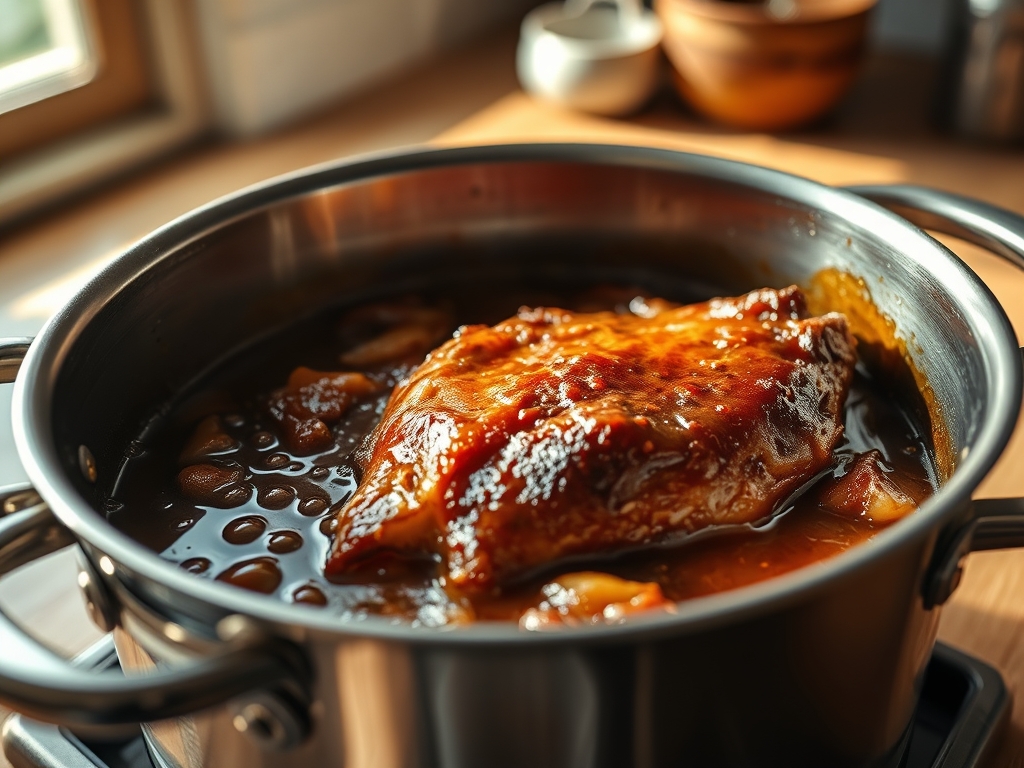
Return the brisket to the pot along with the beef stock, thyme, and bay leaves. The liquid should cover about two-thirds of the meat. Cover with a tight-fitting lid and place in a 150C / 300F oven. This is a low and slow game.
Pro Tip: Consistent temperature is vital. Use an oven thermometer to verify your appliance's accuracy. A steady 150C ensures the liquid stays at a gentle simmer rather than a violent boil, preventing the muscle fibers from tightening and squeezing out all their moisture.
5. The Rest and Slicing Protocol
Once the internal temperature hits 95C / 203F, remove the pot from the oven. Do not touch the meat for at least 30 minutes. Transfer the brisket to a cutting board and slice against the grain using a sharp carving knife.
Pro Tip: Resting allows the internal pressure to stabilize and the juices to redistribute. If you cut it immediately, the moisture will evaporate instantly, leaving you with a dry, disappointing result. Slicing against the grain shortens the muscle fibers, ensuring every bite is tender.
Section B: Prep & Timing Fault-Lines:
The most frequent human error is "The Stall." Around 70C / 160F, the internal temperature of the meat will stop rising as moisture evaporates from the surface. Do not panic and do not raise the heat. Raising the heat will ruin the texture. Simply wait it out or wrap the pot tightly with foil under the lid to create a high-humidity environment that bypasses the stall. Another timing error is the "Early Pull." If the meat is tough, it simply hasn't been in long enough. Collagen conversion is a function of time plus temperature; there are no shortcuts.
THE VISUAL SPECTRUM
Section C: Thermal & Visual Troubleshooting:
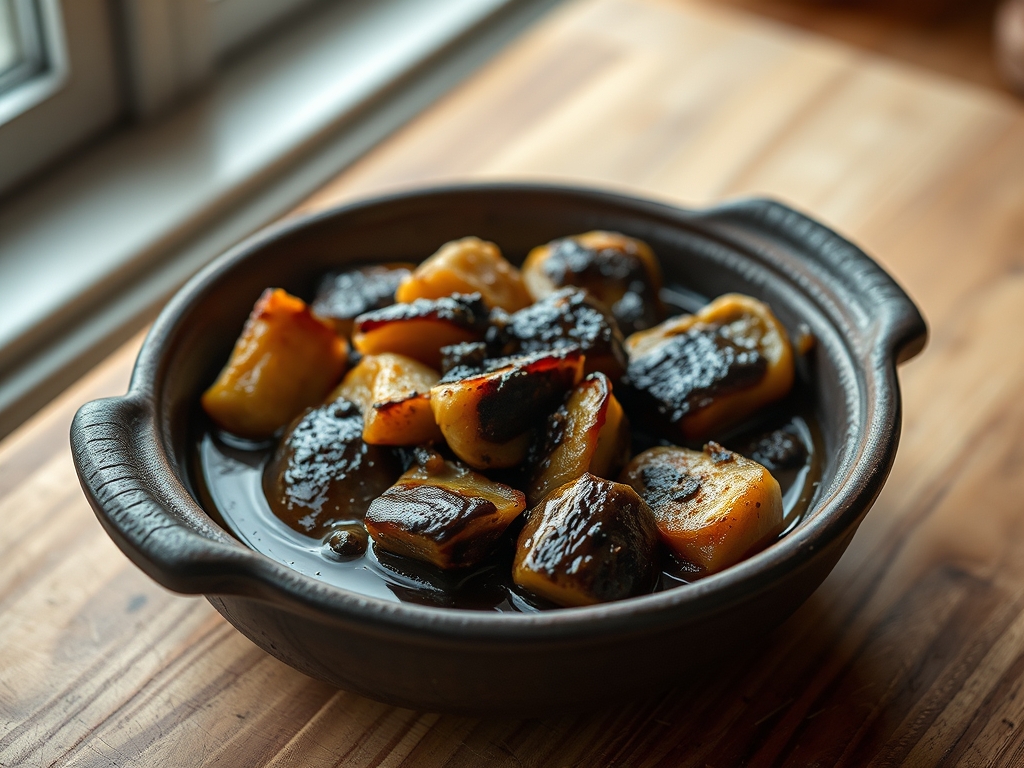
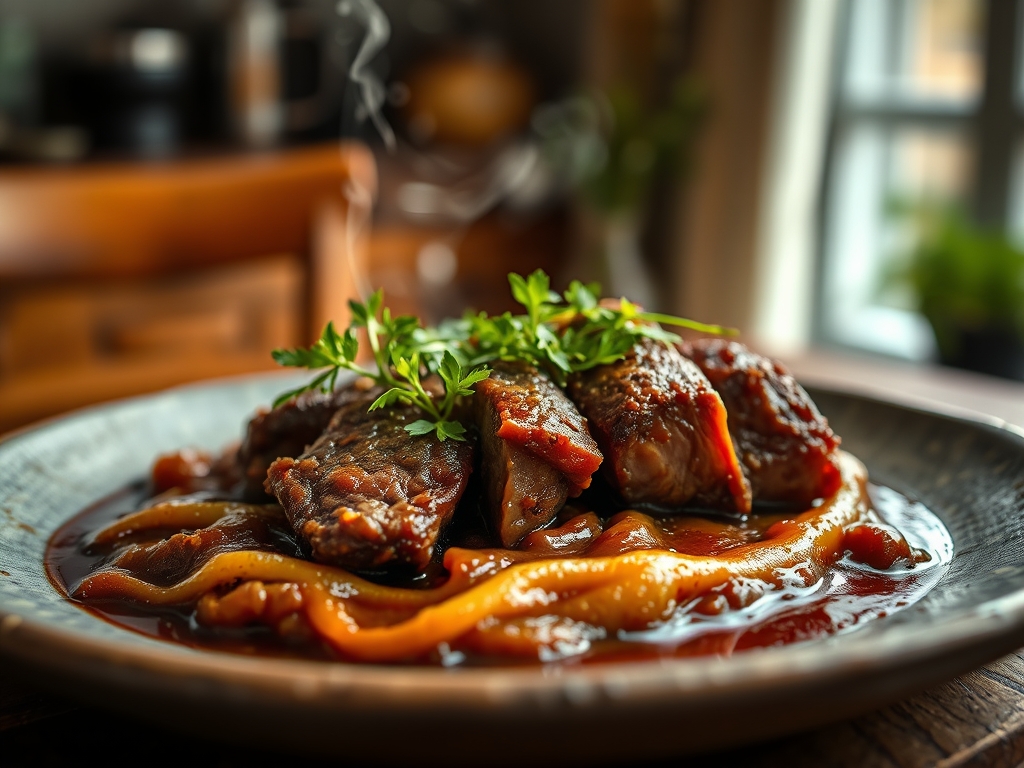
Look closely at the Masterclass photo. You should see a distinct color gradient. The exterior should be dark, almost black (the bark), while the interior remains a deep, succulent pinkish-brown. If your meat looks gray and washed out, you failed the searing phase or used too much liquid, essentially boiling the meat rather than braising it. If the sauce is thin and watery, it lacks the viscous quality seen in the image. To fix this, remove the meat and boil the liquid on the stovetop to reduce it by half, or use a cold butter mount (beurre manié) to aerate and thicken the sauce. If the vegetables are mushy and indistinguishable, they were likely cut too small for a five-hour cook. Next time, use larger "oblique" cuts to ensure they maintain their shape and provide visual contrast on the plate.
THE DEEP DIVE
Macro Nutrition Profile:
A standard 150g serving of braised brisket provides approximately 35g of protein, 22g of fat, and 4g of carbohydrates (mostly from the aromatic vegetables and wine reduction). It is a powerhouse of Vitamin B12 and Zinc.
Dietary Swaps:
- Vegan: Replace brisket with large heads of cauliflower or "Lion's Mane" mushrooms. Use mushroom stock and soy sauce for depth.
- Keto: Eliminate the carrots and use a dry red wine with the lowest residual sugar. Ensure the beef stock has no added starches.
- Gluten-Free: This recipe is naturally GF, provided your beef stock is certified and you do not use flour to thicken the sauce.
Meal Prep & Reheating Science:
Brisket actually improves after 24 hours in the fridge. As it cools, the melted collagen turns into a gel, further infusing the meat with flavor. When reheating, do so slowly in the sauce. Rapid heating in a microwave will cause the protein fibers to contract and toughen. Use a low oven (120C / 250F) to gently bring the molecular structure back to a serving temperature without overcooking the core.
THE KITCHEN TABLE
Why is my brisket still tough after four hours?
You likely haven't reached the "rendering point." Connective tissue needs sustained heat to convert into gelatin. Check the internal temperature; if it is below 90C, put it back in. Patience is a mandatory ingredient in this protocol.
Can I use a slow cooker for this?
Yes, but you will lose the evaporation necessary for a concentrated sauce. If using a slow cooker, reduce your stock volume by 25% and always sear the meat in a pan first to trigger the Maillard reaction.
What is the best way to store leftovers?
Store the meat submerged in its own braising liquid in an airtight container. This prevents oxidation and ensures the meat remains hydrated. It will stay optimal for up to four days in the refrigeration unit.
My sauce is too salty, how do I save it?
Do not add water, as it dilutes the flavor profile. Instead, add a splash of unseasoned rice vinegar or a squeeze of lemon. The acidity will mask the saltiness without compromising the body of your Beef Brisket Braise.