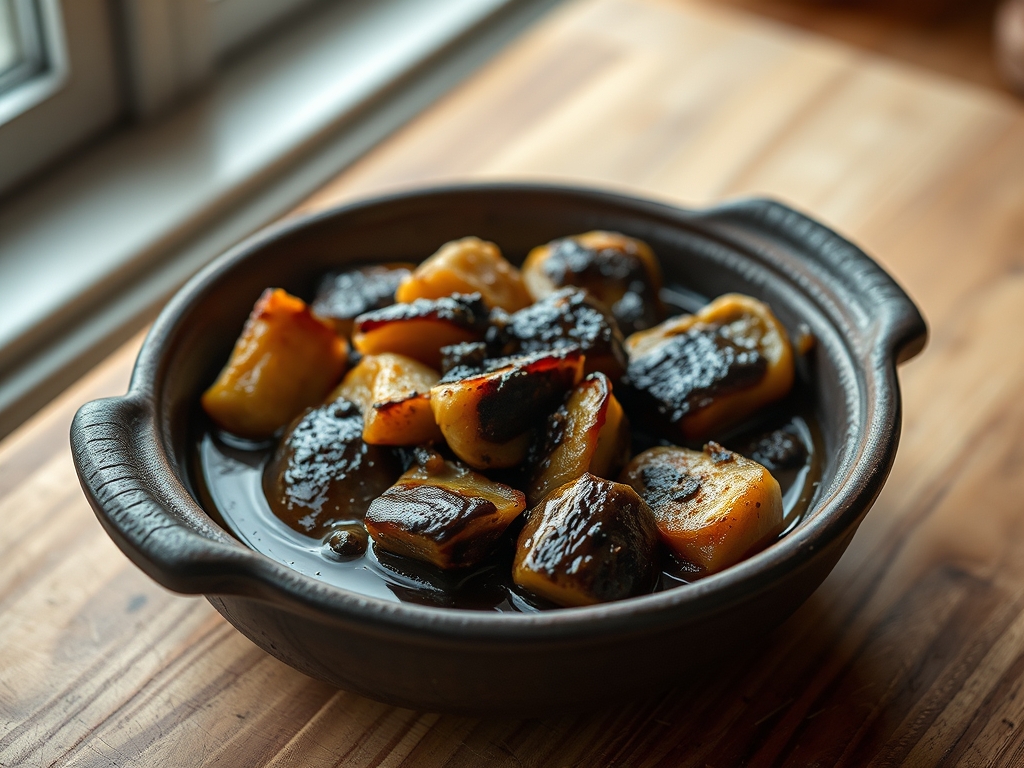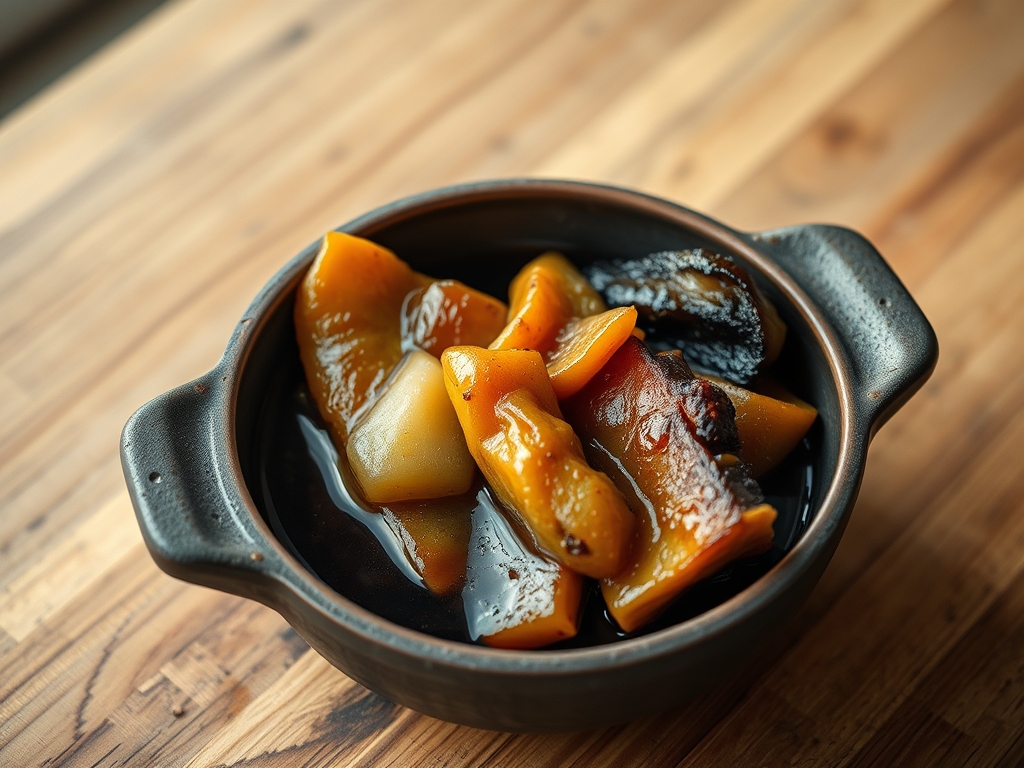
The scent of wild juniper and rendered fat is not just a kitchen byproduct; it is the olfactory signature of a successful biological extraction. We are moving beyond the realm of casual home cooking and entering the theater of high density protein optimization. When you engage with Braised Venison Data, you are managing a lean, muscular profile that lacks the forgiving marbling of commercial beef. This is an exercise in structural integrity and moisture retention. The goal is a fork tender result that maintains its cellular architecture without collapsing into a mushy, over-processed pulp. We are looking for deep, mahogany hues and a sauce so viscous it coats the back of a spoon like liquid velvet. Every gram of connective tissue must be systematically converted into gelatin through precise thermal application. Forget what you know about quick searing. This is a marathon of molecular transformation where the rewards are measured in iron rich saturation and unparalleled depth of flavor. Prepare your station; we are about to audit the very essence of dark game.
THE DATA MATRIX
| Metric | Specification |
|---|---|
| Prep Time | 45 Minutes |
| Execution Time | 4.5 Hours |
| Yield | 6 Servings |
| Complexity (1-10) | 7.5 |
| Estimated Cost per Serving | $12.00 – $18.00 |
THE GATHERS
Ingredient Protocol:
- 1.5 kg / 3.3 lbs Venison Shoulder (boneless, cubed into 5cm pieces)
- 500 ml / 2.1 cups Robust Red Wine (Cabernet or Syrah)
- 750 ml / 3.2 cups Fortified Beef or Game Stock
- 60 ml / 4 tbsp High-Smoke Point Oil (Grapeseed or Avocado)
- 250 g / 2 cups Mirepoix (Equal parts onion, carrot, celery)
- 45 g / 3 tbsp Tomato Paste (Double concentrated)
- 4 cloves Garlic (Smashed)
- 5 g / 1 tsp Black Peppercorns (Whole)
- 3 sprigs Fresh Thyme
- 2 leaves Bay Laurel
- 30 g / 2 tbsp Cold Unsalted Butter (For mounting)
Section A: Ingredient Quality Audit:
Sub-par raw materials will compromise your Braised Venison Data before the heat even hits the pan. If your venison lacks a deep, ruby color or exhibits a "metallic" scent, it may have been improperly bled or aged. To fix "gamey" imbalances, soak the meat in buttermilk for two hours to draw out excess blood and soften the iron profile. If your stock is thin and lacks body, it will fail to emulsify. The technical fix is to whisk in 5 grams of unflavored gelatin per 250ml of liquid to simulate the collagen density of a professional kitchen reduction.
THE MASTERCLASS
Step 1: The Maillard Initiation
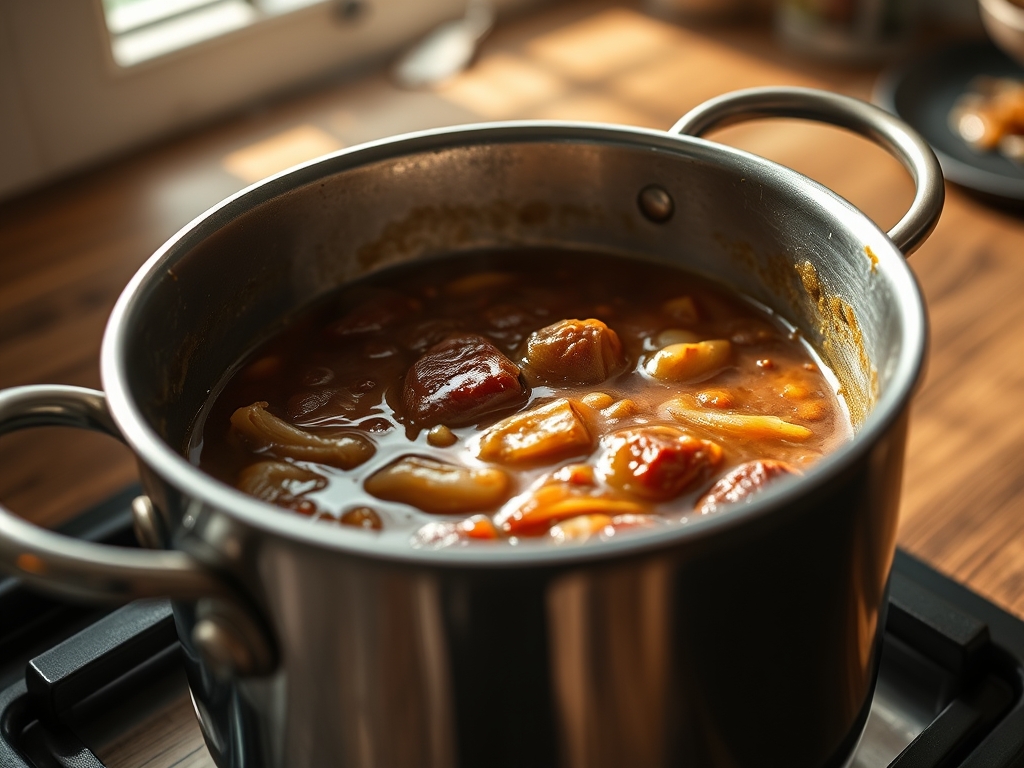
Pat the venison dry using lint-free towels until the surface is moisture-free. Season aggressively with kosher salt. Heat your heavy-bottomed Dutch oven until the oil reaches its shimmering point. Sear the meat in batches, ensuring no overcrowding.
Pro Tip: Use a digital infrared thermometer to ensure the pan surface is at least 200C (400F). This triggers the Maillard reaction, creating complex flavor compounds that cannot be replicated later. A bench scraper is useful here to clear any stubborn bits from your cutting board.
Step 2: Aromatics and Fond Development
Remove the meat and discard excess fat, leaving a thin film. Add your mirepoix and cook until the onions are translucent. Stir in the tomato paste and cook for three minutes until it turns a rusty brick color.
Pro Tip: This process, known as pincage, removes the raw acidity of the tomato and deepens the color of the final sauce. Use a flat-edged wooden spatula to scrape the "fond" (browned bits) from the bottom of the vessel.
Step 3: The Deglaze and Submersion
Pour in the red wine to deglaze the pan, scraping vigorously. Reduce the liquid by half. Return the venison to the pot along with the stock, garlic, and herbs. The liquid should cover three-quarters of the meat.
Pro Tip: Use a saucier if you are reducing the wine separately for better evaporation control. Reducing the wine first removes harsh alcohol notes while concentrating the piquant fruit acids.
Step 4: The Low-Thermal Extraction
Cover with a tight-fitting lid or a cartouche (parchment paper lid) and place in a 150C (300F) oven. Braise for 3 to 4 hours, checking every hour to ensure the liquid is at a bare simmer, not a rolling boil.
Pro Tip: Use a dual-probe oven thermometer to monitor the internal temperature of the braising liquid. If it exceeds 95C (203F), the muscle fibers will tighten and squeeze out moisture, resulting in dry meat.
Step 5: The Emulsion Finish
Once the meat is tender, strain the liquid into a clean pan. Reduce over high heat until it achieves a viscous consistency. Whisk in cold butter cubes one at a time to aerate and emulsify the sauce.
Pro Tip: This technique, monter au beurre, adds a professional sheen and rounds out the tannins of the wine. Use a fine-mesh chinois for the smoothest possible sauce texture.
Section B: Prep & Timing Fault-Lines:
The most common human error is rushing the cooling process. If you serve the venison immediately after it leaves the oven, the muscle fibers are still constricted. Allow the meat to rest in its liquid for at least 20 minutes before the final reduction. If your timing is off and the meat is ready too early, keep it submerged in the liquid at 60C (140F) to prevent oxidation and drying.
THE VISUAL SPECTRUM
Section C: Thermal & Visual Troubleshooting:
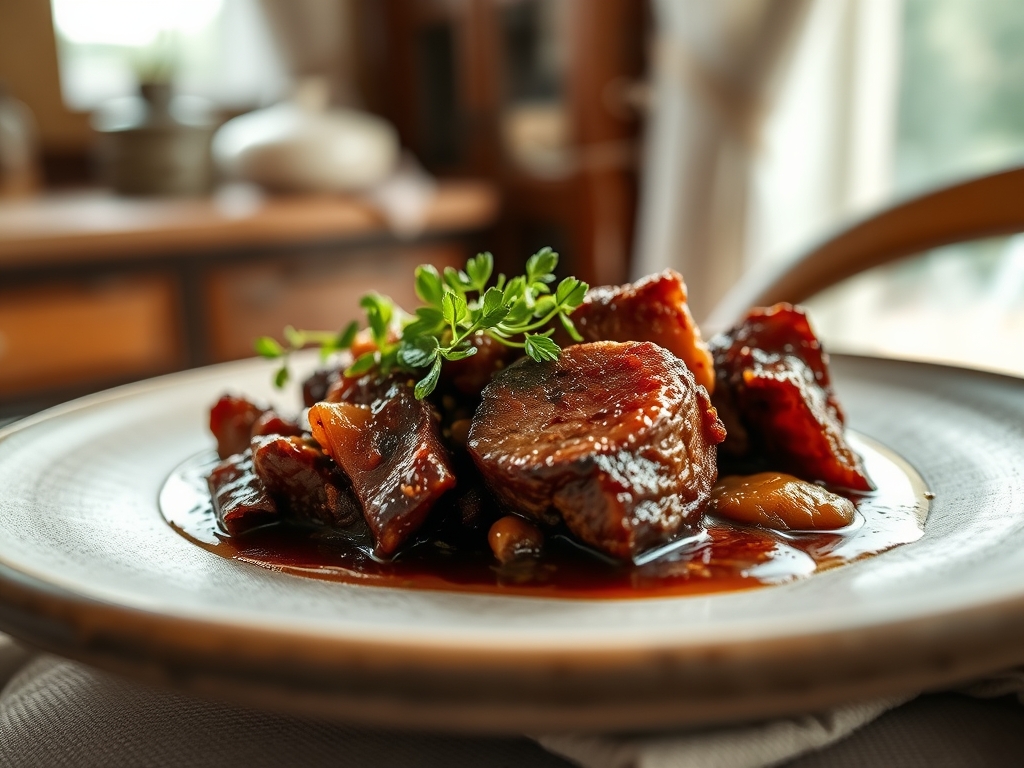
Referencing the Masterclass photo, your Braised Venison Data should exhibit a "glaze" rather than a "soup." If your dish looks dull or gray, your sear was insufficient; next time, increase the initial pan temperature. If the sauce is breaking (oil separating from the liquid), it has been boiled too hard. To fix this, add a splash of cold stock and whisk vigorously to re-establish the emulsion. The vegetables should be soft but not disintegrated. If they have vanished, your dice was too small for the 4-hour thermal window.
THE DEEP DIVE
Macro Nutrition Profile:
Venison is a nutritional powerhouse. A standard 150g serving provides approximately 35g of protein, 4g of fat, and 0g of carbohydrates. It is exceptionally high in B12, Zinc, and Heme-Iron, making it the ultimate recovery fuel for high-output individuals.
Dietary Swaps:
- Vegan: Replace venison with king oyster mushroom "scallops" and use a mushroom-based dashi instead of beef stock.
- Keto: Ensure the wine is bone-dry and omit the carrots; replace with daikon radish for a similar texture.
- GF: This recipe is naturally gluten-free provided your stock is not thickened with flour.
Meal Prep & Reheating Science:
Braised meats actually improve after 24 hours. As the dish cools, the gelatin-rich sauce penetrates the muscle fibers. When reheating, use a low heat and add a tablespoon of water to loosen the proteins. Avoid the microwave; the high-frequency waves vibrate water molecules too violently, which can toughen the venison.
THE KITCHEN TABLE
Why is my venison tough even after 4 hours?
You likely boiled the meat instead of simmering it. High heat causes proteins to shrink and toughen. Ensure your oven temperature is calibrated and the liquid stays below a boil.
Can I use a slow cooker for this?
Yes, but you must sear the meat and aromatics in a separate pan first. Slow cookers do not reach the temperatures required for the Maillard reaction, resulting in a flat flavor profile.
What is the best wine for venison?
Choose a wine with high tannins and dark fruit notes like a Syrah or Malbec. The tannins bind with the meat proteins, softening the texture during the long braise.
How do I know when the braise is officially done?
Use the "fork test." The meat should offer zero resistance when pierced and should pull apart with gentle pressure, yet still hold its shape when lifted from the pot.