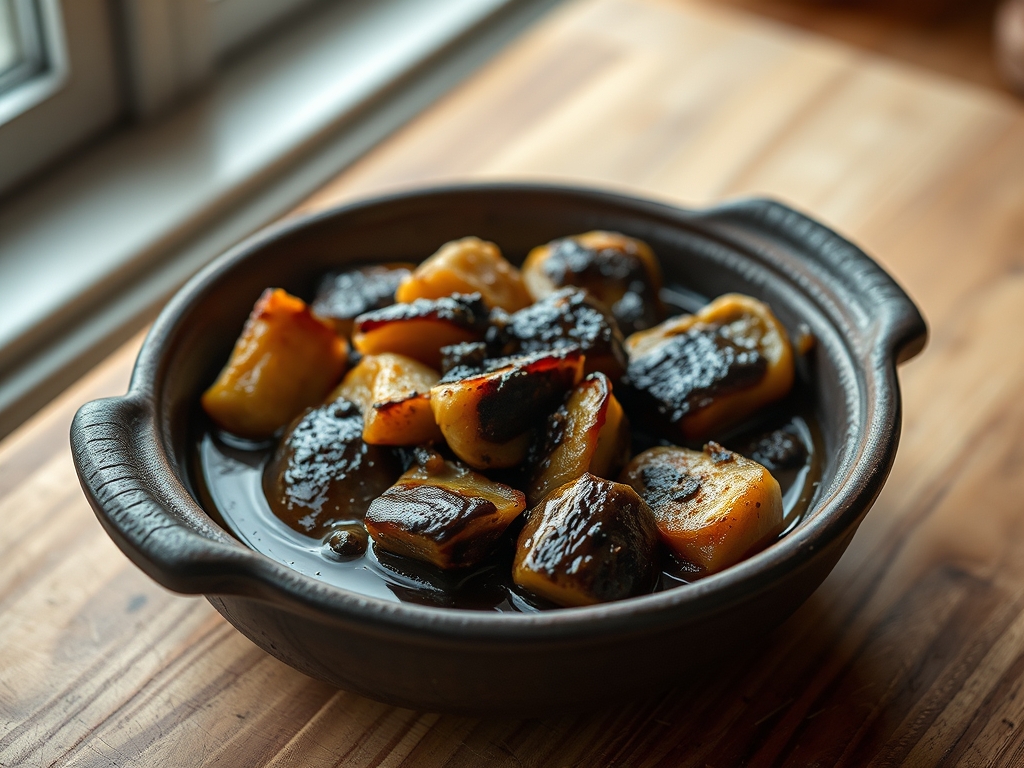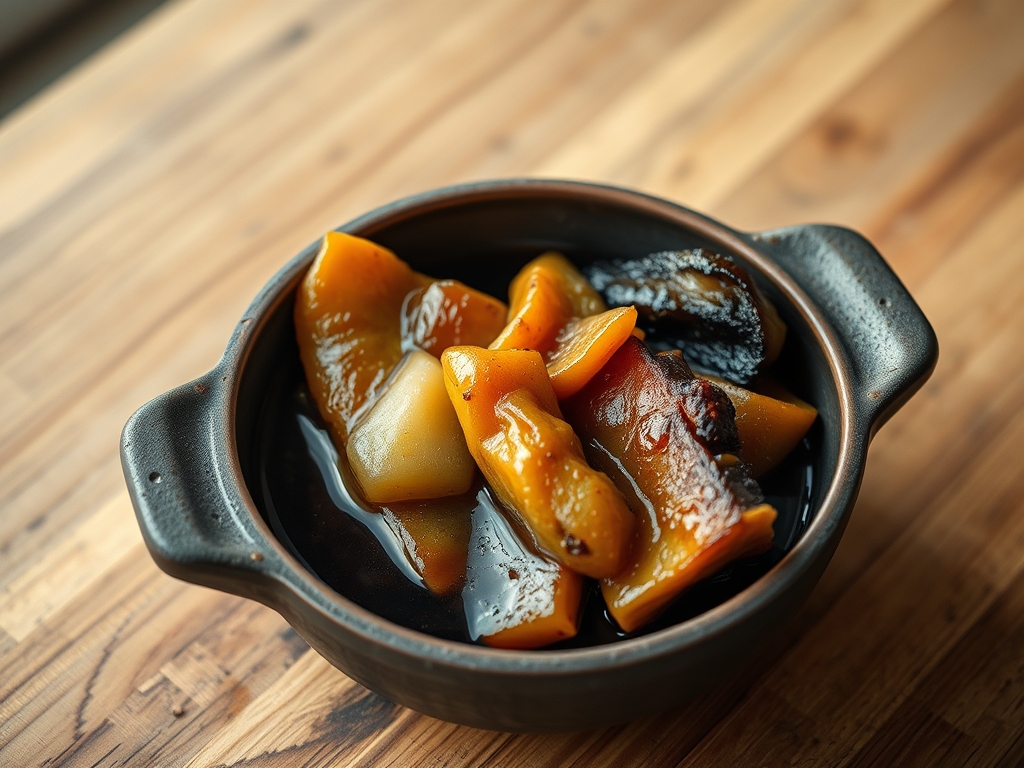
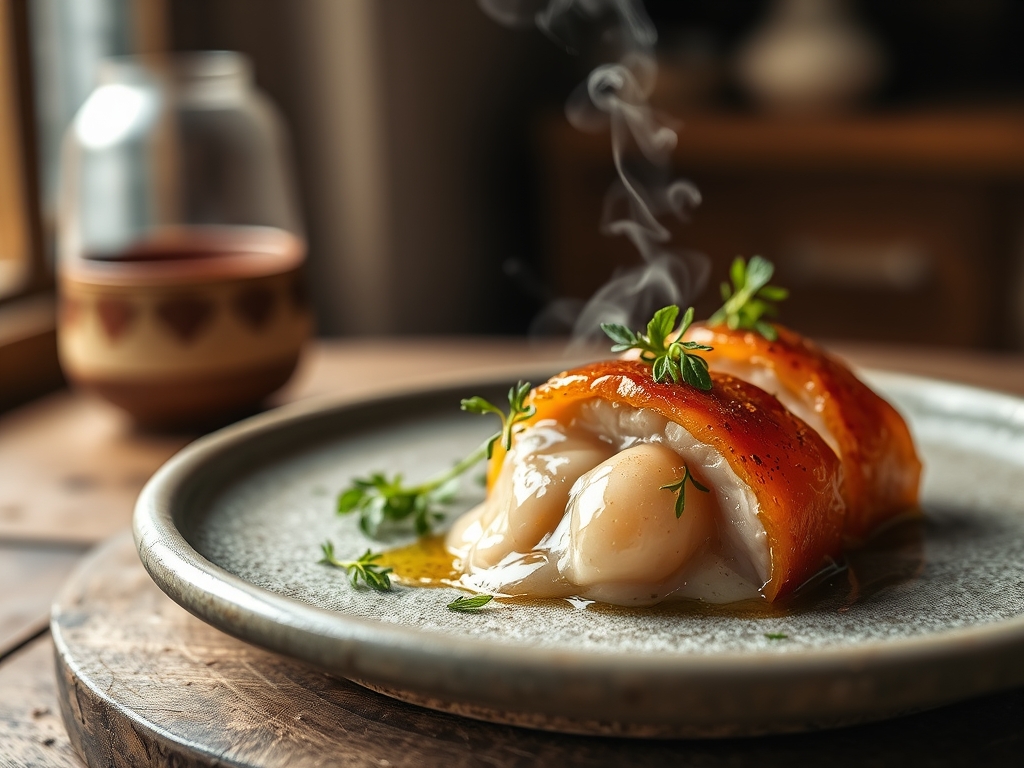
Forget everything you know about thin, watery stocks that vanish on the palate like a ghost in the night. We are entering the realm of structural integrity where liquid becomes architecture. When you tilt a spoon of elite dark pork broth, it should resist the pull of gravity with a slow, honeyed drip. This is not mere soup; it is a high-performance suspension of lipids and proteins. The secret weapon in this culinary engineering project is Pork Trotter Gelatin. By leveraging the sheer density of collagen found in the feet of the pig, we create a base that coats the tongue and carries flavor with a velvet intensity. We are chasing that sticky, lip-smacking finish that signifies a perfect extraction. This process requires patience and a ruthless commitment to the Maillard reaction. We are not just boiling bones; we are orchestrating a complex chemical transformation that turns tough connective tissue into liquid gold. Prepare your station. We are about to build a foundation of flavor so robust it could support a skyscraper.
THE DATA MATRIX
| Metric | Specification |
|---|---|
| Prep Time | 45 Minutes |
| Execution Time | 12 Hours |
| Yield | 4 Liters / 1.05 Gallons |
| Complexity (1-10) | 8 |
| Estimated Cost per Serving | $1.25 |
THE GATHERS
Ingredient Protocol:
- 2.5 kg / 5.5 lbs Pork Trotters (split lengthwise)
- 3 kg / 6.6 lbs Pork Neck Bones or Femur Bones
- 500g / 1.1 lbs Yellow Onions (halved, skin on)
- 300g / 10.6 oz Carrots (rough chop)
- 200g / 7 oz Leeks (white and light green parts only)
- 100g / 3.5 oz Ginger (smashed)
- 50g / 1.8 oz Garlic Bulbs (halved horizontally)
- 60ml / 4 tbsp Neutral High-Smoke Point Oil
- 10L / 2.6 Gallons Filtered Water
- 15g / 1 tbsp Black Peppercorns
Section A: Ingredient Quality Audit:
If your pork trotters arrive with a faint ammonia scent or greyish hue, do not proceed. This indicates poor storage and will ruin the clarity of the Pork Trotter Gelatin. To fix sub-par aromatics like soft ginger or sprouted garlic, perform a hard char in a dry cast iron skillet before adding them to the pot. This masks "off" flavors with smoky carbon notes. If the bones lack marrow density, supplement the batch with 500g of pork back fat to ensure the necessary lipid emulsification for a creamy, opaque finish.
THE MASTERCLASS
Step-by-Step Execution:
1. The Thermal Purge
Place all bones and split trotters into a large stockpot and cover with cold water. Bring to a hard boil for 15 minutes. You will see a grey, aggressive foam rise to the surface. Drain the entire pot and scrub every bone under cold running water to remove coagulated blood and impurities.
Pro Tip: Use a bench scraper to remove any stubborn bits from your workspace after cleaning. This purge is essential for a "clean" flavor profile; without it, the resulting Pork Trotter Gelatin will taste metallic and muddy.
2. The Maillard Roasting
Preheat your oven to 230C / 450F. Pat the cleaned bones dry with paper towels. Arrange them on heavy-duty sheet pans and roast for 45 to 60 minutes until they are deep mahogany brown. Flip them halfway through the process to ensure even caramelization.
Pro Tip: Use a digital scale to ensure your bone-to-water ratio remains precise. Roasting triggers the Maillard reaction, creating the complex flavor compounds that define a "dark" broth rather than a "white" paitan.
3. The Aromatics Deglaze
While the bones roast, sear your onions, ginger, and garlic in a saucier or large skillet until the faces are blackened. Once the bones are finished, transfer them to the stockpot. Use a splash of water to deglaze the roasting pans, scraping up every brown bit (the fond) with a wooden spoon.
Pro Tip: This fond is concentrated umami. Ignoring the residue on the roasting pan is a cardinal sin in high-concentration broth production.
4. The Long Extraction
Add the roasted bones, charred aromatics, and filtered water to the pot. Bring to a simmer, then reduce heat to the lowest possible setting. The surface should barely ripple. Simmer uncovered for 10 to 12 hours, topping up with water only if the bones become exposed.
Pro Tip: Use an infrared thermometer to maintain a liquid temperature between 90C and 95C. This prevents the fat from emulsifying too early, allowing the collagen to break down into Pork Trotter Gelatin without creating a greasy "broken" texture.
5. The Final Reduction and Pass
Strain the liquid through a fine-mesh chinois lined with muslin or cheesecloth. Discard the solids. Return the liquid to a clean pot and boil vigorously to render and aerate the broth until it reaches your desired viscosity.
Pro Tip: A conical strainer is non-negotiable here. The goal is a liquid that feels tacky on the lips, a sign that the collagen has fully transitioned into a high-density gelatinous state.
Section B: Prep & Timing Fault-Lines:
The most common human error is rushing the purge or the simmer. If you boil the broth too violently in the early stages, you will trap impurities in the fat, resulting in a gritty mouthfeel. If your timing is off and the broth is too thin after 12 hours, do not panic. Simply increase the heat and reduce the volume by 25%. This concentrates the Pork Trotter Gelatin and fixes the structural integrity of the liquid.
THE VISUAL SPECTRUM
Section C: Thermal & Visual Troubleshooting:
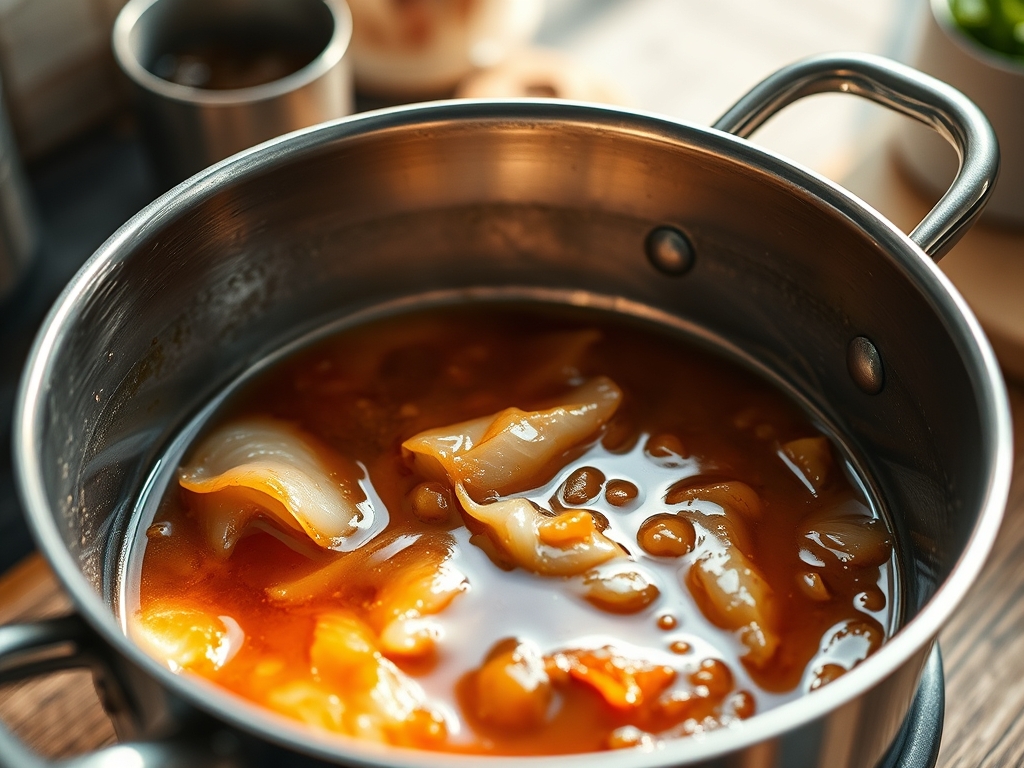
Look at the reference photo: notice the deep amber hue and the shimmering "oil pearls" on the surface. If your broth looks pale or yellow, your roasting step was insufficient. You can fix this by simmering a small amount of dark soy sauce or caramelized onion skins in the broth for 20 minutes. If the broth appears dull and matte rather than glossy, you lack sufficient Pork Trotter Gelatin. The fix is to whisk in a small amount of cold butter or lard at the very end to aerate the mixture and restore the sheen. If you see "floaties" or sediment, your straining protocol failed; pass the liquid through a coffee filter for ultimate clarity.
THE DEEP DIVE
Macro Nutrition Profile
Per 250ml serving, this broth is a protein powerhouse. It typically contains 15g to 20g of protein, almost entirely from collagen and amino acids like glycine and proline. It contains approximately 8g of fat and 0g of carbohydrates, making it an ideal fuel source for metabolic efficiency.
Dietary Swaps
- Vegan: Replace pork with a mix of dried shiitake mushrooms, kombu, and roasted soy beans. Use agar-agar to mimic the viscosity of Pork Trotter Gelatin.
- Keto/GF: This recipe is naturally keto-friendly and gluten-free. Ensure your "dark" elements come from roasting, not flour-based thickeners.
Meal Prep & Reheating Science
When chilled, this broth will turn into a solid, rubbery brick. This is the Pork Trotter Gelatin at work. To reheat, melt it slowly over low heat to avoid scorching the proteins. Do not microwave on high power; the uneven heating can "pop" the fat globules and cause the emulsion to separate, leaving you with a greasy film.
THE KITCHEN TABLE
Why is my broth a solid jelly when cold?
That is the gold standard! It means you successfully extracted the Pork Trotter Gelatin. Once heated, it will return to a rich, viscous liquid. It is a sign of high protein density and superior quality.
Can I use a pressure cooker to save time?
You can, but you sacrifice depth. A pressure cooker extracts gelatin in 2 hours but fails to develop the complex oxidative flavors found in a 12-hour open-pot simmer. Use it only if you are in a high-speed pinch.
How do I get that "sticky" lip feel?
The stickiness comes from the concentration of Pork Trotter Gelatin. If your broth isn't sticky, reduce it further. The more water you evaporate, the more the collagen molecules cross-link, creating that signature tacky texture on the palate.
My broth tastes bitter. What happened?
You likely burnt the aromatics or the bones instead of browning them. Carbon tastes acrid. Next time, monitor the roasting process more closely. To save a bitter batch, add a pinch of sugar and more ginger to balance.