Listen to that sound. It is not a mere crunch; it is the structural failure of a high-tension organic polymer. When you snap a premium grade of dried seaweed, you are witnessing the pinnacle of marine engineering. We are here to discuss Nori Sheet Integrity, the fundamental baseline for any culinary operation involving the Pyropia genus. Most amateur kitchens treat these sheets like construction paper, but an auditor knows better. We are looking for a specific tensile strength that resists ambient humidity while maintaining a brittle, glass-like fracture pattern. If your seaweed bends like wet cardboard, your infrastructure has collapsed. We are hunting for that elusive sheen; a deep, forest-green luster that indicates a high density of chlorophyll and amino acids. This is the foundation of the umami profile. To ignore the structural physics of the sheet is to invite a soggy, chewy disaster that ruins the textural contrast of your dish. We demand rigidity. We demand a clean break. We demand total Nori Sheet Integrity before a single grain of rice touches the surface.
THE DATA MATRIX
| Metric | Specification |
|---|---|
| Prep Time | 10 Minutes |
| Execution Time | 15 Minutes |
| Yield | 10 Reinforced Sheets |
| Complexity (1-10) | 4 |
| Estimated Cost per Serving | $0.85 |
THE GATHERS
Ingredient Protocol:
- 10 Sheets / 25g Premium Gold-Grade Nori
- 30ml / 2 tbsp Toasted Sesame Oil (Cold-Pressed)
- 5g / 1 tsp Fine Himalayan Pink Salt
- 2g / 0.5 tsp Wasabi Powder (Optional for piquant infusion)
- 15ml / 1 tbsp Perilla Oil (For high-smoke point stability)
Section A: Ingredient Quality Audit:
If your raw sheets arrive with a reddish-brown tint, you are dealing with oxidation or low-grade harvest cycles. This material lacks the nitrogen-rich profile required for a superior snap. To fix this, you must infuse the sheets with a light coating of oil and a flash-heat treatment to artificially trigger a minor Maillard reaction, though it will never match the quality of a true "Gold" grade. If your sesame oil smells acrid, it has gone rancid; throw it out. A rancid oil will penetrate the porous membrane of the seaweed and destroy the Nori Sheet Integrity from the inside out, leading to a greasy, limp product. Always audit your salt grain size; large crystals will not adhere to the slick surface of the seaweed. Use a mortar and pestle to aerate and grind your salt into a fine dust for maximum surface area coverage.
THE MASTERCLASS
1. Surface Preparation and Moisture Control
Clear your station of all steam-producing appliances. Use a bench scraper to ensure your work surface is bone-dry and free of debris. Lay out your sheets with the rough side facing up. This side contains the necessary micro-topography to hold your oil and seasoning.
Pro Tip: Use a digital scale to measure your oil precisely. Even a 2ml deviation can oversaturate the fibers, causing the sheet to lose its structural tension and become viscous rather than crisp.
2. The Oil Emulsification and Application
Combine your sesame and perilla oils in a small saucier. Whisk vigorously to ensure a homogenous blend. Using a silicone pastry brush, apply the thinnest possible layer of oil to the rough side of the sheet. You are not painting a wall; you are lubricating a microscopic lattice.
Pro Tip: Professional chefs use a light sweeping motion from the center outward to avoid pooling at the edges. This ensures the heat distribution remains uniform during the toasting phase.
3. Precision Thermal Activation
Heat a heavy-bottomed cast iron skillet or a specialized nori toaster over medium-low heat. Pass the sheet, oiled side down, approximately two inches above the heat source for 3 to 5 seconds. You will see the color shift from a dark purple-green to a vibrant, electric green.
Pro Tip: Use an infrared thermometer to verify the surface temperature of your pan. You want a consistent 300 degrees Fahrenheit to render the oils into the fiber without scorching the delicate organic matter.
4. Seasoning Adhesion and Cooling
Immediately after the heat pass, dust the sheet with your micronized salt and wasabi powder. The residual heat will allow the salt to bond with the oil film. Place the finished sheet on a wire cooling rack to allow air to circulate around both sides.
Pro Tip: Do not stack the sheets until they have reached room temperature. Stacking hot sheets creates a localized micro-climate of steam, which is the natural enemy of Nori Sheet Integrity.
Section B: Prep & Timing Fault-Lines:
The most common human error is the "Slow Pass." If you move the sheet too slowly over the heat, the edges will curl and the center will remain under-toasted. This creates uneven tension across the sheet, leading to structural failure during rolling. Another timing error is seasoning too late. If the oil cools and begins to infuse into the fiber before the salt is applied, the seasoning will simply bounce off the surface. You have a three-second window post-heat for optimal adhesion. Use a stopwatch if your internal clock is uncalibrated.
THE VISUAL SPECTRUM
Section C: Thermal & Visual Troubleshooting:
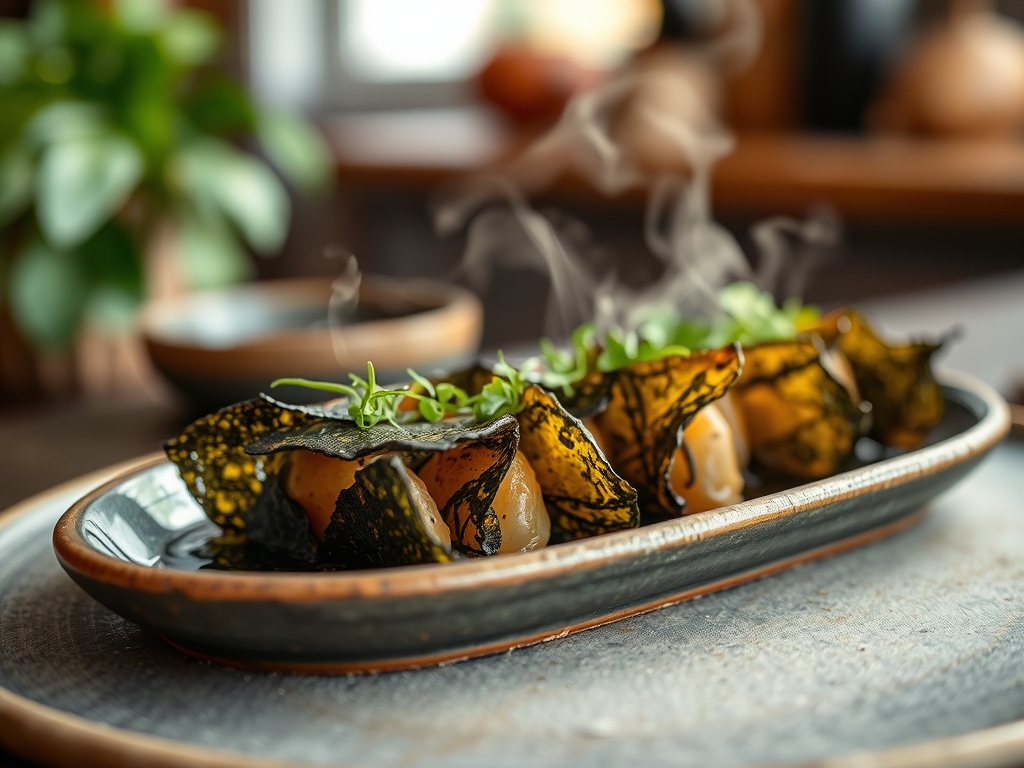
Referencing the Masterclass photo, observe the uniform distribution of light across the sheet surface. If you see dark, wet-looking patches, you have over-applied the oil; use a lint-free cloth to blot the excess immediately. If the sheet appears dull and greyish, it has been overexposed to heat, causing the chlorophyll to degrade. A perfect sheet should have a "shatter-glass" texture when viewed under a macro lens. If the edges are curling upward like a scroll, your heat source is too high, causing the protein fibers on the toasted side to contract faster than the top side. Lower the BTU output and increase the distance between the sheet and the element.
THE DEEP DIVE
Macro Nutrition Profile
Per 5-sheet serving: 45 Calories, 3g Protein, 4g Fat (primarily healthy unsaturated fats from sesame oil), 2g Carbohydrates, 1g Fiber. Nori is a powerhouse of Vitamin B12 and Iodine, making it a critical component for metabolic infrastructure.
Dietary Swaps
- Vegan: Naturally compliant. Ensure your wasabi powder does not contain lactose-based fillers.
- Keto: High fat-to-carb ratio makes this an ideal snack. Replace salt with smoked paprika for a flavor boost without adding sugars.
- GF: Nori is naturally gluten-free, but check your sesame oil source for cross-contamination in processing facilities.
Meal Prep & Reheating Science
To maintain molecular structure over 48 hours, store finished sheets in a vacuum-sealed container with a food-grade silica desiccant pack. If the sheets lose their snap, do not microwave them. This will turn the remaining moisture into steam and ruin the texture. Instead, deglaze a pan (dry) and flash-toast them for 2 seconds per side to re-crisp the fibers.
THE KITCHEN TABLE
How do I know if my Nori is high quality?
Look for the "Gold" or "A" rating on the packaging. The sheet should be opaque when held up to the light. If it looks like a net with many holes, the Nori Sheet Integrity is compromised from the start.
Why does my seaweed get chewy after five minutes?
Humidity is the culprit. Seaweed is highly hygroscopic, meaning it pulls moisture from the air. Always serve immediately or store in an airtight environment with a desiccant to maintain that essential brittle fracture.
Can I use an oven instead of a pan?
You can, but you lose the granular control of the flash-toast. If using an oven, set it to 275 degrees Fahrenheit and watch it like a hawk. One minute is usually the limit before the fibers begin to break down.
Is the wasabi powder necessary for the structure?
No, it is purely for a piquant flavor profile. However, the fine powder can help absorb any microscopic excess of oil, which indirectly assists in maintaining the dry, crisp mouthfeel of the final product.