Forget the anemic, chalky profile of the over-roasted breast; we are here to discuss the heavy lifting of the avian anatomy. Dark Turkey Thighs are the high-performance engines of the bird, packed with a dense concentration of myoglobin and connective tissue that requires a strategic thermal intervention to unlock. If you are still treating dark meat like a secondary citizen of the platter, you are fundamentally miscalculating your culinary ROI. This is about the glorious transformation of collagen into gelatin; it is about the aggressive rendering of subcutaneous fat into a viscous, liquid gold that coats the palate. We are not just cooking dinner; we are conducting a high-stakes audit of protein denaturation. To master the thigh is to master the art of the long game. You want skin so shattered it mimics stained glass and meat that yields to the slightest lateral pressure of a fork. Strap in, calibrate your sensors, and prepare for a deep dive into the most misunderstood, high-yield asset in the poultry inventory.
THE DATA MATRIX
| Metric | Specification |
|---|---|
| Prep Time | 30 Minutes |
| Execution Time | 2.5 Hours |
| Yield | 4-6 Servings |
| Complexity (1-10) | 4 |
| Estimated Cost per Serving | $4.50 USD |
THE GATHERS
Ingredient Protocol:
- 4 Large Dark Turkey Thighs (Bone-in, Skin-on) (approx. 1.8kg / 4 lbs)
- Kosher Salt (30g / 2 tbsp)
- Smoked Paprika (15g / 2 tbsp)
- Unsalted Butter, softened (115g / 1/2 cup)
- Fresh Thyme, minced (5g / 1 tbsp)
- Garlic Cloves, microplaned (4 units)
- Dry White Wine for deglazing (120ml / 1/2 cup)
- Chicken or Turkey Stock (240ml / 1 cup)
- Black Pepper, freshly cracked (5g / 1 tsp)
Section A: Ingredient Quality Audit:
If your Dark Turkey Thighs exhibit a pale, watery hue, you are likely dealing with high-moisture injection "utility" birds. This excess water will sabotage your Maillard reaction. To fix this, perform a dry brine for at least 12 hours uncovered in the refrigerator to desiccate the skin. If your butter is too cold, it will not emulsify with the aromatics; use a microwave on 10 percent power for 15-second intervals to achieve a malleable texture without breaking the fat solids. Sub-par stock? Infuse it with a tablespoon of tomato paste and a splash of soy sauce to artificially boost the umami profile before it hits the roasting pan.
THE MASTERCLASS
1. Surface Desiccation and Seasoning
Pat the thighs with industrial-grade paper towels until the skin is bone-dry. Use a digital scale to measure your salt and paprika precisely. Rub the salt mixture over every square millimeter of the protein, ensuring you reach the crevices near the bone.
Pro Tip: Moisture is the enemy of the Maillard reaction. By removing surface water, you allow the thermal energy to immediately begin breaking down proteins rather than wasting energy on evaporation. Use a bench scraper to clean your workstation of excess salt to prevent cross-contamination.
2. Compound Lipid Application
In a small stainless steel bowl, combine the softened butter, microplaned garlic, and thyme. Lift the skin of the Dark Turkey Thighs carefully and shove the butter mixture directly onto the muscle fibers. Smooth the skin back down to create a protective, self-basting seal.
Pro Tip: Placing lipids under the skin creates a pressurized steam chamber. As the butter melts, it will infuse the meat with fat-soluble flavor compounds while the skin crisps from both sides. A silicone spatula is the ideal tool for mixing this compound butter to ensure zero waste.
3. The Thermal Launch
Preheat your oven to 165C (325F). Place the thighs on a wire rack set inside a heavy-duty roasting pan. This allows for 360-degree airflow, preventing the dreaded "soggy bottom" syndrome found in traditional roasting methods.
Pro Tip: Using a wire rack elevates the meat out of its own juices, ensuring the heat circulates via convection. This prevents the bottom of the thigh from braising while the top roasts, maintaining a uniform texture across the entire cut.
4. Deglaze and Emulsify
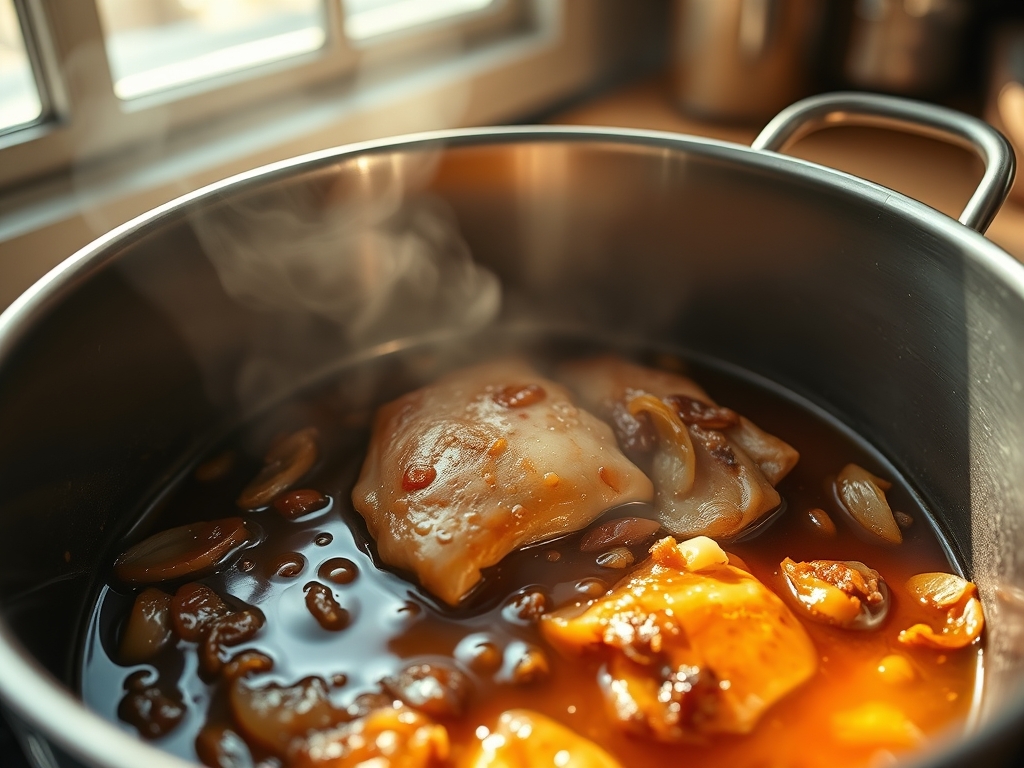
Once the internal temperature reaches 74C (165F), remove the thighs and set them on a warm resting board. Place the roasting pan over two burners. Pour in the white wine to deglaze, scraping up the fond with a flat-edged wooden spoon. Add the stock and whisk in a saucier until the liquid is viscous and reduced by half.
Pro Tip: The fond (those brown bits on the pan) contains concentrated amino acids and sugars. Deglazing captures this chemical complexity. Use a fine-mesh strainer when transferring the sauce to a saucier to ensure a silky, professional finish.
Section B: Prep & Timing Fault-Lines:
The most common failure point is the "resting" phase. If you cut into the Dark Turkey Thighs immediately, the internal pressure will force the juices out, leaving you with dry fibers. Allow a minimum of 15 minutes for the moisture to redistribute. If your oven runs hot, the skin might burn before the bone-in center reaches safety; tent the pan loosely with foil to deflect radiant heat while the conductive heat continues to work.
THE VISUAL SPECTRUM
Section C: Thermal & Visual Troubleshooting:
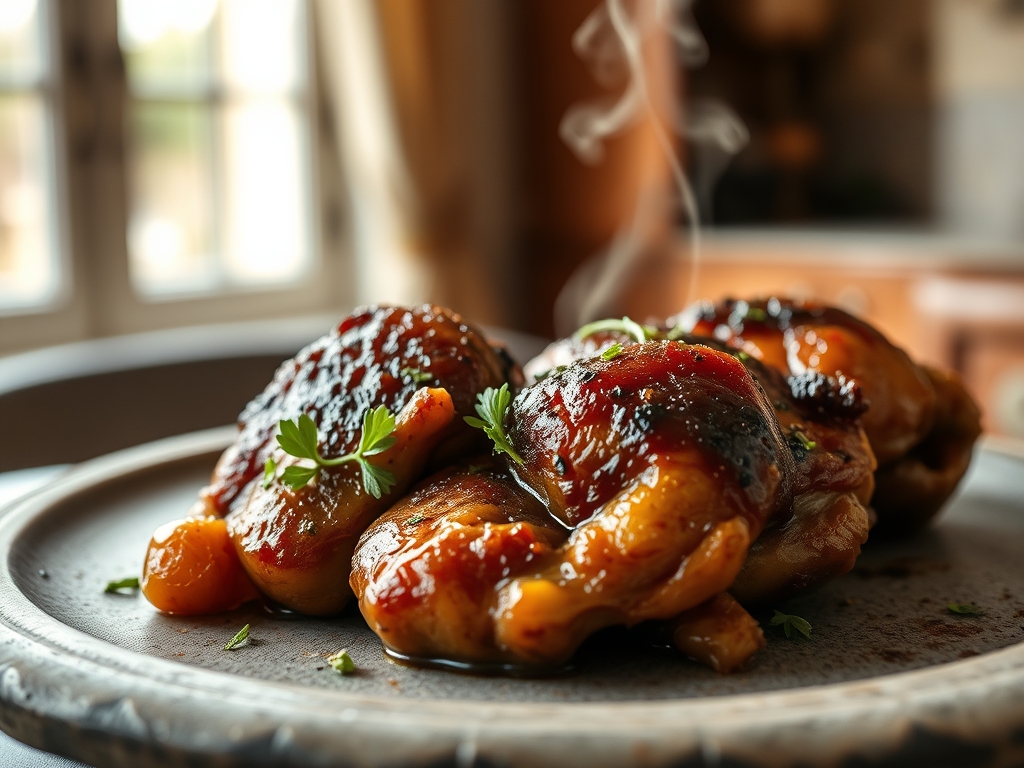
Observe the photo above; the skin should be a deep, mahogany gold, not a pale yellow. If your bird looks "anemic," increase the heat to 215C (425F) for the final 10 minutes. If the skin is pulling away from the bone too aggressively, you have over-cooked the connective tissue, resulting in a stringy texture. The ideal visual cue is a "taut" appearance where the skin looks shrink-wrapped over the muscle. If the juices in the pan are cloudy rather than clear, your fat has emulsified with water; simmer the sauce longer to separate the impurities and clarify the flavor profile.
THE DEEP DIVE
Macro Nutrition Profile
Dark Turkey Thighs are a powerhouse of bioavailable minerals. Per 100g serving, expect approximately 180 calories, 24g of protein, and 9g of fat. They are significantly higher in Zinc and Selenium than white meat, making them a superior choice for metabolic health.
Dietary Swaps
- Vegan: This protocol can be applied to large, thick-cut cauliflower steaks or "lion's mane" mushrooms, though cooking times will reduce by 60 percent. Use a vegan butter alternative with a high smoke point.
- Keto: This recipe is naturally keto-compliant. Ensure your stock has no added sugars or cornstarch thickeners.
- GF: The recipe is naturally gluten-free; just ensure your stock is certified.
Meal Prep & Reheating Science
To maintain molecular structure during reheating, avoid the microwave. The high-frequency waves agitate water molecules, toughening the protein. Instead, place thighs in a covered dish with two tablespoons of stock and heat at 150C (300F) until the internal temp reaches 60C (140F). This gentle steam prevents the fat from oxidizing and becoming "warmed-over" in flavor.
THE KITCHEN TABLE
Why is dark meat pink even when cooked?
This is due to myoglobin. When exposed to heat, myoglobin can sometimes retain a pinkish hue even at safe temperatures. Always trust your digital thermometer over your eyes; 74C (165F) is the legal limit for safety.
Can I use boneless thighs for this?
You can, but you lose the thermal buffer. Bones act as insulators, slowing down the cook to allow collagen breakdown. If using boneless, reduce your total oven time by approximately 30 percent to avoid desiccation.
How do I get the skin extra crispy?
Aerate the skin. Use a small needle to prick tiny holes in the skin (without piercing the meat). This allows the fat to escape and fry the skin from the outside in, resulting in a "crackling" texture.
What wine works best for deglazing?
Select a high-acid, dry white like Sauvignon Blanc or Pinot Grigio. Avoid oaked Chardonnays; the tannins will turn bitter when reduced in the roasting pan, ruining your viscous sauce profile.