Forget everything you think you know about the humble soup starter. We are not merely boiling water; we are conducting a high-stakes extraction of marine proteins to create a liquid gold that serves as the backbone of superior cuisine. The Dried Anchovy Base is the undisputed heavyweight champion of the pantry. It is a concentrated explosion of glutamates that hits the palate with the force of a tidal wave. Imagine the scent of a sun-drenched coastline compressed into a single, shimmering pot of broth. This is the foundation of depth. This is where the chemistry of the sea meets the precision of the laboratory. When you handle these dehydrated specimens, you are managing a complex matrix of salt, sun-cured fats, and intense mineral profiles. A properly executed base does not just taste like fish; it tastes like the very concept of savory satisfaction. We are looking for a profile that is clean yet aggressive, providing a piquant backbone to any dish it touches. Let us calibrate our equipment and prepare for a total sensory overhaul.
THE DATA MATRIX
| Metric | Specification |
|---|---|
| Prep Time | 15 Minutes |
| Execution Time | 45 Minutes |
| Yield | 2 Liters / 8.5 Cups |
| Complexity (1-10) | 4 |
| Estimated Cost per Serving | $0.45 USD |
THE GATHERS
Ingredient Protocol:
- Dried Anchovies (Large): 100g / 3.5 oz (Heads and guts removed for clarity).
- Dried Kelp (Kombu): 20g / 0.7 oz (Wiped with a damp cloth).
- Dried Shiitake Mushrooms: 30g / 1 oz (For secondary glutamate synergy).
- White Radish (Mu): 300g / 10.5 oz (Sliced into 1cm rounds).
- Leek (White and light green parts): 150g / 5.3 oz.
- Garlic Cloves: 40g / 1.4 oz (Slightly crushed).
- Filtered Water: 2.5L / 10.5 cups.
- Black Peppercorns: 5g / 1 tsp.
Section A: Ingredient Quality Audit:
Sub-par raw materials are the primary cause of a failed extraction. If your dried anchovies possess a yellowed, oily sheen, the fats have likely gone rancid. This results in a bitter, soapy aftertaste that no amount of seasoning can fix. To mitigate this, perform a "snap test" by breaking the fish; it should be brittle and dry. If you find yourself with slightly older stock, toast the fish in a dry saucier for an extra three minutes to volatilize any off-smelling compounds. For kombu that lacks the white powdery bloom (mannitol), understand that your umami yield will be lower. Compensate by adding a teaspoon of light soy sauce during the final simmer to boost the amino acid profile.
THE MASTERCLASS
Step 1: The De-Guttering Procedure
Manually remove the heads and the dark intestinal tracts from the larger anchovies. This prevents the broth from turning gray and introduces a clean, sharp finish rather than a muddy bitterness.
Pro Tip: Use a sharp bench scraper to organize your discarded parts quickly. Removing the guts is essential because the digestive enzymes in the fish can break down proteins prematurely, leading to a cloudy and unrefined liquid structure.
Step 2: Dry Thermal Activation
Place the cleaned anchovies into a cold saucier and bring the heat to medium. Toast the fish for 5 to 7 minutes until they become fragrant and slightly golden. Do not add oil; we want to render out the residual moisture.
Pro Tip: Use a digital scale to ensure your ratios are exact. Toasting the fish triggers a mild Maillard reaction on the surface, which adds a nutty complexity that balances the natural salinity of the sea.
Step 3: The Cold Start Infusion
Add the filtered water, radish, leek, garlic, and shiitake mushrooms to the pot. It is imperative to start with cold water to allow the soluble proteins to dissolve gradually. Bring the mixture to a gentle simmer, never a rolling boil.
Pro Tip: Use a thermometer to keep the liquid between 90C and 95C. Boiling causes the calcium in the fish bones to emulsify with the fats, resulting in a cloudy, milky broth that lacks the crystalline clarity required for a professional audit.
Step 4: The Kombu Extraction
Add the dried kelp once the water reaches a simmer. Let it steep for exactly 10 minutes, then remove it immediately.
Pro Tip: Leaving kombu in boiling water for too long releases alginic acid, which creates a slimy, viscous texture. Monitoring the timing with a digital stopwatch ensures the extraction of glutamic acid without the unwanted mucilage.
Step 5: The Final Reduction and Filtration
Allow the remaining ingredients to simmer for an additional 30 minutes. Once the radish is translucent and the liquid has reduced by approximately 20 percent, strain the broth through a fine-mesh sieve lined with cheesecloth.
Pro Tip: Do not press down on the solids during straining. Let gravity do the work to maintain the structural integrity of the liquid. Pressing the vegetables will force particulates into the base, ruining the visual clarity showcased in our technical photography.
Section B: Prep & Timing Fault-Lines:
Timing is the difference between a masterpiece and a mess. If you rush the simmer, you fail to infuse the liquid with the deep minerals from the fish bones. Conversely, simmering for over an hour will cause the delicate fish proteins to disintegrate, creating a "fishy" rather than "savory" aroma. If your heat is too high, the water evaporates too quickly, concentrating the salt to an aggressive, unpalatable level. Always maintain a "lazy bubble" throughout the process to ensure a steady, gentle extraction of flavor.
THE VISUAL SPECTRUM
Section C: Thermal & Visual Troubleshooting:
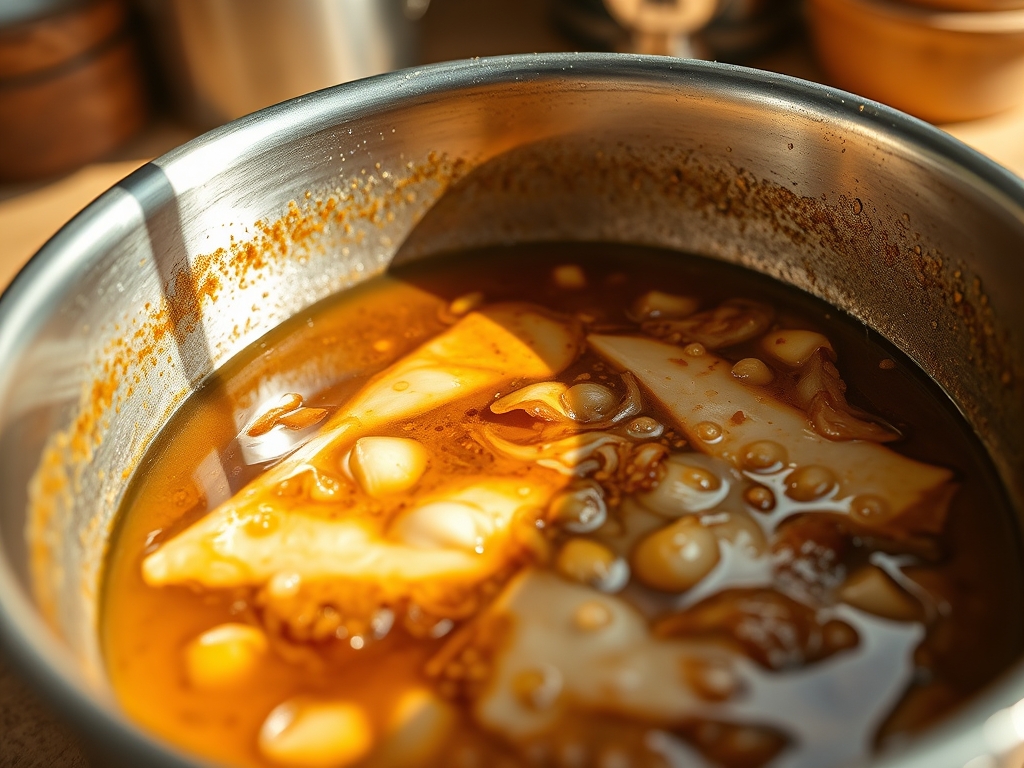
Observe the reference image above. The ideal Dried Anchovy Base should be pale gold and perfectly transparent. If your broth appears brown, you have likely over-toasted the fish or used mushrooms that were too dark. If the liquid is cloudy, your temperature exceeded the boiling point, causing fat emulsification. To fix a cloudy broth, you can perform a "raft" technique using egg whites to collect impurities, though it is better to control the heat from the start. A dull, gray color indicates that the guts were not properly removed. Always look for that shimmering, light-reflective quality; it is the hallmark of a high-purity marine extraction.
THE DEEP DIVE
Macro Nutrition Profile:
This base is an absolute powerhouse of micronutrients with negligible caloric impact. It is rich in calcium, phosphorus, and Vitamin D. A standard 250ml serving contains approximately 15 calories, 3 grams of protein, and 0 grams of fat. It is a metabolic booster that provides essential minerals without the heavy caloric load of oil-based stocks.
Dietary Swaps:
- Vegan: Replace the anchovies with a 1:1 ratio of extra dried shiitake mushrooms and a small piece of toasted nori. This maintains the glutamate levels without the animal protein.
- Keto/GF: This recipe is naturally Keto and Gluten-Free. To further enhance the Keto profile, you may infuse the finished broth with a teaspoon of MCT oil or grass-fed butter for a viscous, satiating mouthfeel.
Meal Prep & Reheating Science:
To maintain the molecular structure, cool the broth rapidly in an ice bath before refrigerating. This prevents the growth of thermophilic bacteria. When reheating, do not boil the liquid again. Bring it to a gentle simmer (around 85C) to preserve the volatile aromatic compounds. Freezing is highly effective; use silicone molds to create "umami bombs" that can be dropped directly into stir-frys or sauces to deglaze a pan.
THE KITCHEN TABLE
Why is my broth bitter?
Bitterness usually stems from failing to remove the anchovy innards. The digestive tract contains bile and enzymes that turn acrid when heated. Ensure a clean "de-guttering" process to maintain a piquant and sweet marine profile.
Can I reuse the solids?
Yes. The anchovies and soy-soaked kelp can be finely chopped and sautéed with sugar and soy sauce to create "furikake." This reduces waste and provides a crunchy, savory topping for rice or salads.
Is the radish mandatory?
The radish acts as a chemical "cleanser." It contains diastase, which helps break down heavy fish odors and contributes a light, peppery sweetness that balances the intense salinity of the Dried Anchovy Base.
How long does it last?
In a sealed glass jar, the base will maintain its integrity for 4 to 5 days in the refrigerator. For long-term storage, freeze the liquid in portions for up to 3 months without significant loss of flavor.