Imagine a world where flavor is not merely a taste but a structural foundation. We are talking about the bedrock of Japanese gastronomy; the silent, shimmering liquid that powers everything from clear soups to complex sauces. Welcome to the high-stakes world of Kombu Dashi Extraction. This is not just boiling seaweed in water. This is a delicate operation of thermal management and molecular release. When you submerge a sheet of dried kelp into water, you are initiating a chemical handshake. You are coaxing glutamic acids out of their cellular prisons and into a suspended state. The goal is a liquid that is clear, golden, and vibrating with umami. If you rush the process, you end up with a bitter, viscous mess that tastes like a stagnant tide pool. If you execute with precision, you achieve a broth that is piquant and ethereal. We are building an infrastructure of flavor here; a glutamate suspension that serves as the canvas for every other ingredient in your kitchen. Let us begin the audit.
THE DATA MATRIX
| Metric | Specification |
|---|---|
| Prep Time | 30 Minutes (Cold Soak) |
| Execution Time | 20 Minutes (Active Heat) |
| Yield | 1 Liter / 4.2 Cups |
| Complexity (1-10) | 3 (Precision Dependent) |
| Estimated Cost per Serving | $0.45 |
THE GATHERS
Ingredient Protocol:
- 10g / 0.35oz Dried Kombu (Kelp)
- 1 Liter / 4.2 Cups Filtered Water
- 15g / 0.5oz Katsuito (Bonito Flakes)
- 15ml / 1 Tablespoon Mirin (Optional for depth)
Section A: Ingredient Quality Audit:
The most common failure point in Kombu Dashi Extraction is the raw material itself. If your kombu is brittle to the point of shattering or lacks the white, powdery bloom of mannitol on the surface, your extraction will be flat. This white powder is not mold; it is the concentrated sugar and salt that provides the depth we crave. If your kombu is old and dusty, you can attempt to revive it by a quick rinse in cold water, but the resulting broth will lack the necessary viscous quality. Furthermore, the water quality is non-negotiable. Hard water containing high calcium levels will inhibit the extraction of glutamates. Always use filtered water to ensure a clean slate for the seaweed to express its mineral profile.
THE MASTERCLASS
1. The Hydration Phase
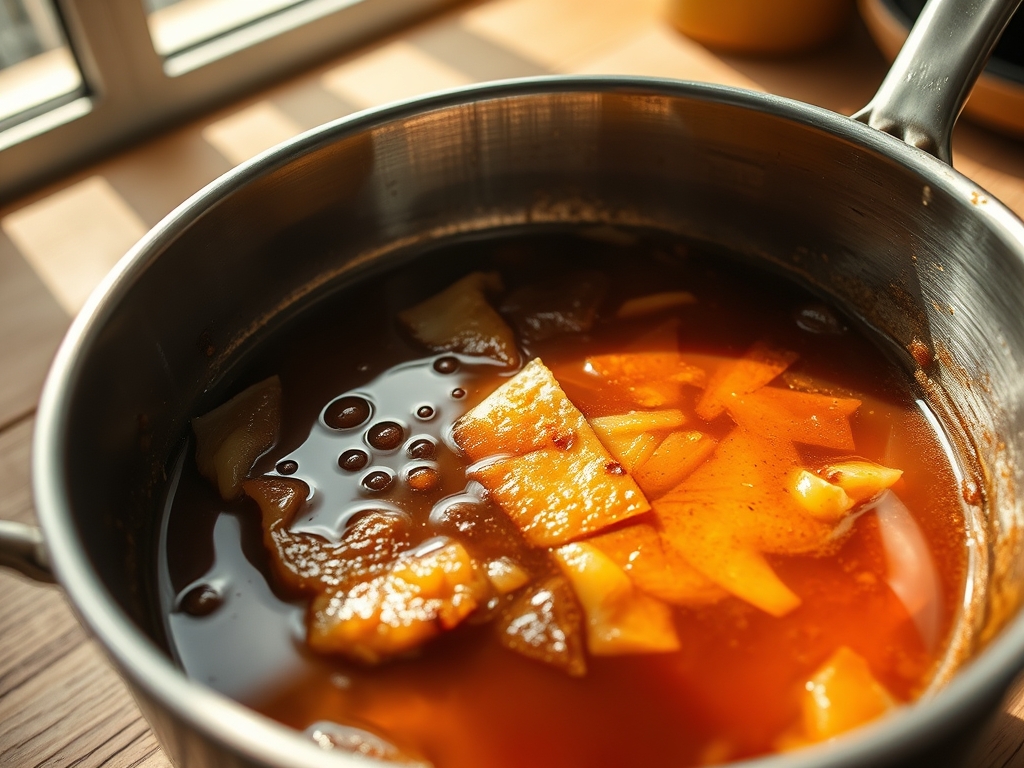
Place your dried kombu into a high-quality stainless steel saucier and cover with the measured filtered water. Let it sit at room temperature for at least 30 minutes. This allows the cellular structure of the kelp to soften without the stress of heat.
Pro Tip: Use a digital scale to measure your water and kombu precisely. The ratio of seaweed to water determines the concentration of the glutamate suspension; guessing leads to inconsistent results that will ruin your seasoning later.
2. Controlled Thermal Ascent
Place the saucier over medium-low heat. You are aiming for a slow climb. Watch the water closely for the first signs of movement. You want to see tiny bubbles forming at the bottom of the pan, but you must never reach a rolling boil.
Pro Tip: Use an infrared thermometer or a probe to monitor the temperature. The ideal extraction zone is between 60C and 80C. If you exceed 90C, the kombu releases tannins and mucilaginous compounds that make the broth bitter and slimy.
3. The Extraction Cut-Off
Just as the water begins to simmer, use a pair of kitchen tongs to remove the kombu. The kelp should be swollen and pliable but not falling apart. Discard or save for a secondary extraction (Niban Dashi).
Pro Tip: This is the critical "Stop" command in your culinary code. Leaving the kombu in past the simmer point is the most frequent error in professional kitchens; it transforms a delicate infusion into a muddy decoction.
4. The Bonito Infusion
Once the kombu is removed, bring the water to a brief boil, then immediately cut the heat. Add your bonito flakes. They should dance on the surface before slowly sinking as they absorb the liquid. Let them steep for exactly two minutes.
Pro Tip: Do not stir the flakes. Stirring releases fine particulates that cloud the broth. Use a fine-mesh chinois or a cheesecloth-lined sieve to strain the liquid after the steep time is complete.
Section B: Prep & Timing Fault-Lines:
Timing is the ghost in the machine. If you leave the bonito flakes in too long, the fishy notes become aggressive and overpower the subtle sweetness of the kombu. If you don't soak the kombu long enough, you'll be forced to use higher heat to compensate, which risks the texture of the broth. Your digital timer is your best friend here. If the broth tastes metallic, you likely overheated the water during the kombu phase. If it tastes thin, your soaking period was insufficient.
THE VISUAL SPECTRUM
Section C: Thermal & Visual Troubleshooting:
Look at the Masterclass photo above. Notice the clarity of the liquid; it should be transparent with a pale, champagne-gold hue. If your dashi looks cloudy or grey, you have likely agitated the ingredients too much or boiled the kombu. If there are dark flecks, your straining process failed. Use a fresh piece of cheesecloth for the final pass to ensure a pristine finish. The texture should be light but have a slight "weight" on the tongue, indicating a successful glutamate suspension. If it feels like plain water, you didn't extract enough mannitol from the kelp surface.
THE DEEP DIVE
Macro Nutrition Profile:
Kombu Dashi is a nutritional powerhouse with negligible caloric impact. It is rich in iodine, potassium, and trace minerals. A standard 1-cup serving contains approximately 10-15 calories, 0g fat, and 1-2g of protein derived from the bonito flakes. Its primary value is the high concentration of natural glutamates which act as a flavor enhancer.
Dietary Swaps:
- Vegan: Omit the bonito flakes and replace them with dried shiitake mushrooms. Soak the mushrooms with the kombu to create a "Zen" dashi.
- Keto/GF: Dashi is naturally keto-friendly and gluten-free. Ensure your mirin is a traditional brew without added corn syrup or wheat-based thickeners.
Meal Prep & Reheating Science:
Dashi can be stored in an airtight container in the refrigerator for up to 3 days. However, the delicate volatile aromatics begin to degrade after 24 hours. To reheat, do so gently over low heat. Never microwave dashi on high power; the uneven heating can "cook" the suspended particles and change the flavor profile. For long-term storage, freeze dashi in ice cube trays to drop into pans for a quick deglaze or to aerate a sauce.
THE KITCHEN TABLE
Why is my dashi slimy?
You likely boiled the kombu or left it in the water for too long. High heat breaks down the kelp's cellular walls, releasing alginic acid. Always remove the kelp before the water reaches a rolling boil to keep it clean.
Can I reuse the kombu?
Yes. This is called Niban Dashi (second broth). It is less refined but excellent for miso soup or simmering vegetables. Simply repeat the process with fresh water and a longer simmer time to extract the remaining flavors.
What is the white powder on my seaweed?
That is mannitol, a natural salt and sugar compound. Do not wash it off. It is the primary source of the umami flavor you are trying to capture. A light wipe with a damp cloth to remove grit is enough.
Do I need to add salt?
Dashi is a base, not a finished soup. While the kombu provides some salinity, you will usually season the final dish with soy sauce or sea salt. Taste the dashi first to understand the baseline mineral levels before adding more.