Imagine a plate where the deep, midnight sheen of the ocean meets the vibrant, high-contrast pop of perfectly seared shellfish. We are not just cooking; we are conducting a high-stakes audit of flavor density and visual impact. Squid Ink Pasta is the undisputed protagonist of this narrative. It is a dish that demands respect for its moody, briny profile and its ability to act as a canvas for the bright, acidic notes of the Mediterranean. When you drop those obsidian strands into a boiling pot, you are engaging with a culinary tradition that prioritizes the visceral over the mundane. The ink provides more than just a gothic aesthetic; it delivers a glutamic punch that amplifies the sweetness of lobster, the snap of shrimp, and the delicate flake of crab. This is an exercise in melanin-rich fluid dynamics where the sauce must cling to the pasta with the tenacity of a velvet glove. We are looking for a glossy, emulsified finish that reflects the kitchen lights like polished chrome. Prepare your station. We are about to optimize your kitchen infrastructure for maximum gastronomic output.
THE DATA MATRIX
| Metric | Specification |
|---|---|
| Prep Time | 25 mins |
| Execution Time | 15 mins |
| Yield | 4 Servings |
| Complexity | 7/10 |
| Estimated Cost per Serving | $12.50 – $18.00 |
THE GATHERS
Ingredient Protocol:
- 500g / 1.1 lbs Squid Ink Pasta (Dry or Fresh)
- 450g / 1 lb Large Shrimp (Peeled and Deveined)
- 225g / 0.5 lbs Sea Scallops (Adductor muscle removed)
- 60ml / 0.25 cup Extra Virgin Olive Oil
- 45g / 3 tbsp Unsalted Butter (High fat content preferred)
- 4 Large Garlic Cloves (Thinly sliced)
- 5g / 1 tsp Red Chili Flakes
- 120ml / 0.5 cup Dry White Wine (Pinot Grigio or Sauvignon Blanc)
- 30ml / 2 tbsp Fresh Lemon Juice
- 15g / 0.5 cup Fresh Parsley (Finely chopped)
- To Taste: Flaky Sea Salt and Fresh Cracked Black Pepper
Section A: Ingredient Quality Audit:
The primary failure point in seafood pasta is the moisture content of the protein. If your scallops are "wet-packed," they will release a milky phosphate liquid that prevents the Maillard reaction. To fix this, brining the scallops in a 5 percent salt solution for 10 minutes then patting them bone-dry with lint-free towels is non-negotiable. If your Squid Ink Pasta lacks that deep sea-salt aroma, it is likely stale. You can infuse the boiling water with a teaspoon of bottled squid ink to rejuvenate the color and flavor profile. Low-quality olive oil will turn bitter when exposed to the high heat required for searing shrimp; always use an oil with a smoke point above 400 degrees Fahrenheit for the initial sear before finishing with your premium finishing oil.
THE MASTERCLASS
Step-by-Step Execution:
1. The Hydration Phase
Bring 4 liters / 1.05 gallons of water to a rolling boil. Use a digital scale to measure 40g of salt; the water should taste like the Atlantic. Drop the Squid Ink Pasta and cook until it is two minutes shy of al dente.
Pro Tip: This is known as "forward cooking." By undercooking the pasta in water, you allow the starch granules to remain thirsty so they can absorb the savory seafood stock in the final stage.
2. The Protein Sear
Pat your shrimp and scallops dry. Heat a heavy-bottomed saucier or stainless steel skillet over medium-high heat. Add half the olive oil. Once the oil begins to shimmer, sear the seafood in batches to avoid crowding.
Pro Tip: Crowding the pan drops the surface temperature, causing the proteins to steam rather than render and brown. You want a golden-brown crust to develop, which creates a complex flavor base for the sauce.
3. The Aromatic Base
Reduce heat to medium. Add the remaining oil and the butter. Once the butter foam subsides, add the sliced garlic and chili flakes. Sauté until the garlic is translucent and fragrant but not browned.
Pro Tip: Garlic contains volatile sulfur compounds that turn bitter if scorched. Using a bench scraper to move the garlic frequently ensures even heat distribution and prevents localized hotspots.
4. The Deglaze and Emulsification
Pour in the white wine to deglaze the pan, scraping up the browned bits (fond) from the bottom. Increase the heat to reduce the liquid by half. Add a ladle of the starchy pasta water.
Pro Tip: The starch in the pasta water acts as a natural stabilizer. When whisked with the fats in the pan, it creates a viscous emulsion that coats the pasta perfectly rather than pooling at the bottom of the bowl.
5. The Final Integration
Transfer the undercooked pasta directly into the saucier using tongs. Add the seafood back into the pan along with the lemon juice and parsley. Toss vigorously over medium heat for 60 seconds.
Pro Tip: This "mantecatura" process uses mechanical energy to aerate the sauce and force the fats and liquids into a creamy, unified state that clings to the melanin-rich strands of the pasta.
Section B: Prep & Timing Fault-Lines:
The most common human error is the "Cold Protein Pivot." Taking shrimp directly from the refrigerator to the pan causes the exterior to overcook before the interior reaches safety. Always temper your seafood at room temperature for 15 minutes. Another fault-line is the "Drained Pasta Trap." Never dump your pasta water down the drain before the sauce is finished. That liquid gold is the only thing standing between a dry, sticky mess and a professional-grade silkiness. If the sauce breaks or looks oily, add 30ml of pasta water and whisk aggressively to re-emulsify the fats.
THE VISUAL SPECTRUM
Section C: Thermal & Visual Troubleshooting:
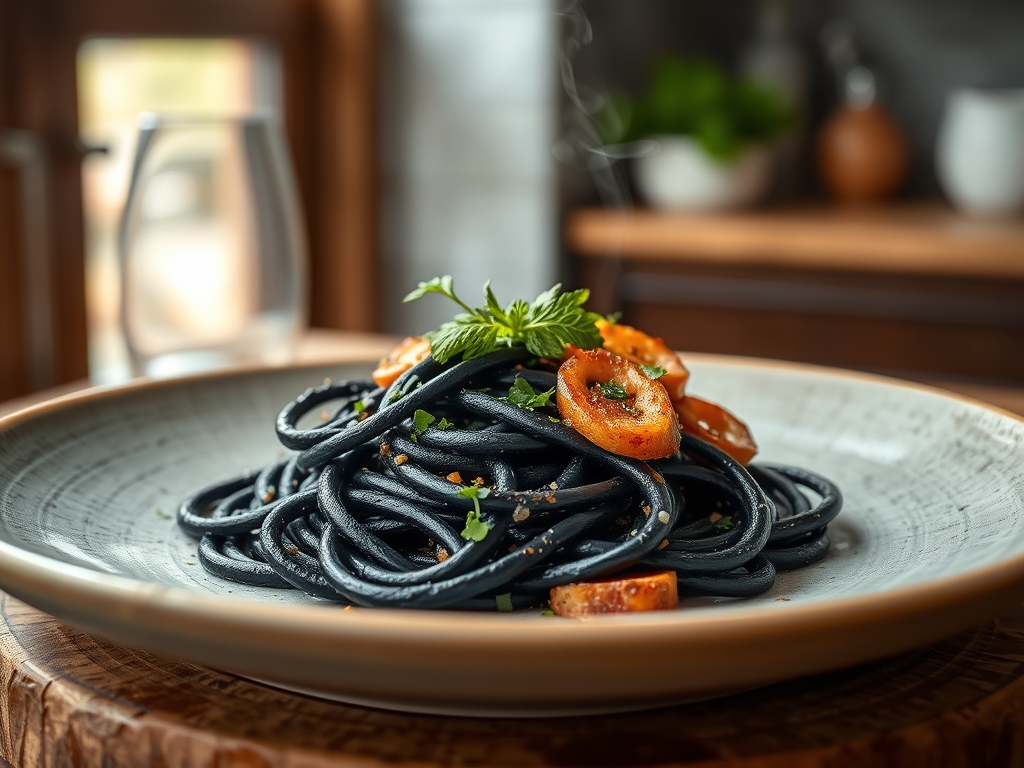
Referencing the Masterclass photo, notice the high-gloss sheen on the pasta strands. If your pasta looks dull or matte, you have insufficient fat or have lost your emulsion. Add a knob of cold butter at the very end to "mount" the sauce for that mirror finish. If your shrimp look tightly curled like a "C," they are perfect; if they look like an "O," they are overcooked and rubbery. The color of the Squid Ink Pasta should remain a deep, saturated black. If it appears grey, it means you have over-diluted the sauce with too much water or cream. The goal is a sharp contrast between the obsidian noodles and the opaque white of the scallops and the vibrant pink of the shrimp.
THE DEEP DIVE
Macro Nutrition Profile:
A standard serving provides approximately 550 calories. It is high in protein (35g) due to the dense seafood load and provides a significant dose of iron and antioxidants from the squid ink. The complex carbohydrates in the durum wheat pasta provide sustained energy release.
Dietary Swaps:
- Vegan: Replace seafood with king oyster mushroom "scallops" and use a vegan squid ink substitute made from black rice extract or activated charcoal. Use a high-quality vegan butter or cashew cream for the emulsion.
- Keto: Swap the pasta for shirataki noodles or zucchini ribbons. Note that the "sauce cling" will be different due to the lack of starch.
- GF: Use gluten-free black bean pasta or corn-based pasta infused with squid ink.
Meal Prep & Reheating Science:
Seafood pasta is notoriously difficult to reheat because the proteins toughen. If you must, store the sauce and pasta separately. Reheat the sauce in a pan with a splash of water to loosen the emulsion, then toss in the pasta. Avoid the microwave at all costs; it vibrates water molecules too violently, causing the delicate fats to separate and the seafood to become rubbery.
THE KITCHEN TABLE
Why is my squid ink pasta fishy?
High-quality squid ink should smell like the sea, not "fishy." If it is overwhelming, your ink or seafood is past its prime. A splash of acidic lemon juice or dry white wine will neutralize trimethylamine, the compound responsible for that odor.
Can I use bottled lemon juice?
Absolutely not. Bottled juice contains preservatives and lacks the bright, volatile oils found in fresh zest and juice. The acidity in fresh lemon is required to cut through the rich, viscous sauce and highlight the seafood's natural sweetness.
What is the best wine for the sauce?
Choose a high-acid, bone-dry white wine. Avoid oaked Chardonnays, as the vanillin notes clash with the briny ink. A crisp Vermentino or Muscadet is the structural ideal for this specific fluid dynamic.
My sauce is too thin, how do I fix it?
Do not add flour. Instead, continue to simmer the sauce with the pasta in the pan. The pasta will continue to release starch and absorb liquid, naturally thickening the sauce until it reaches the desired level of coat-ability.