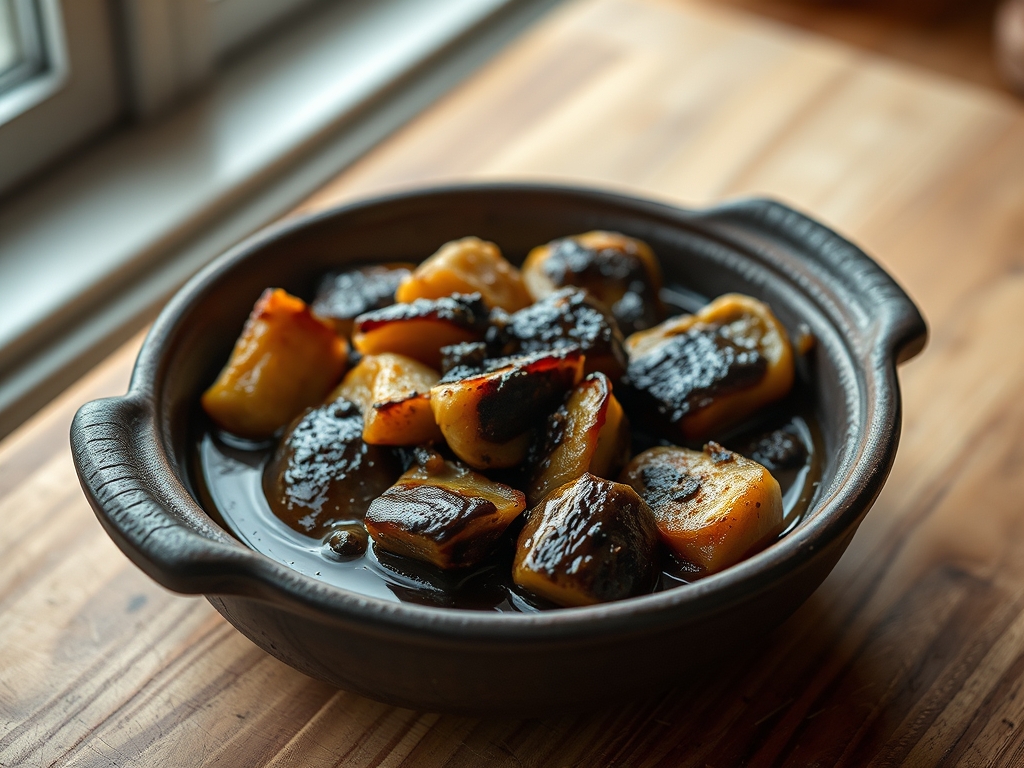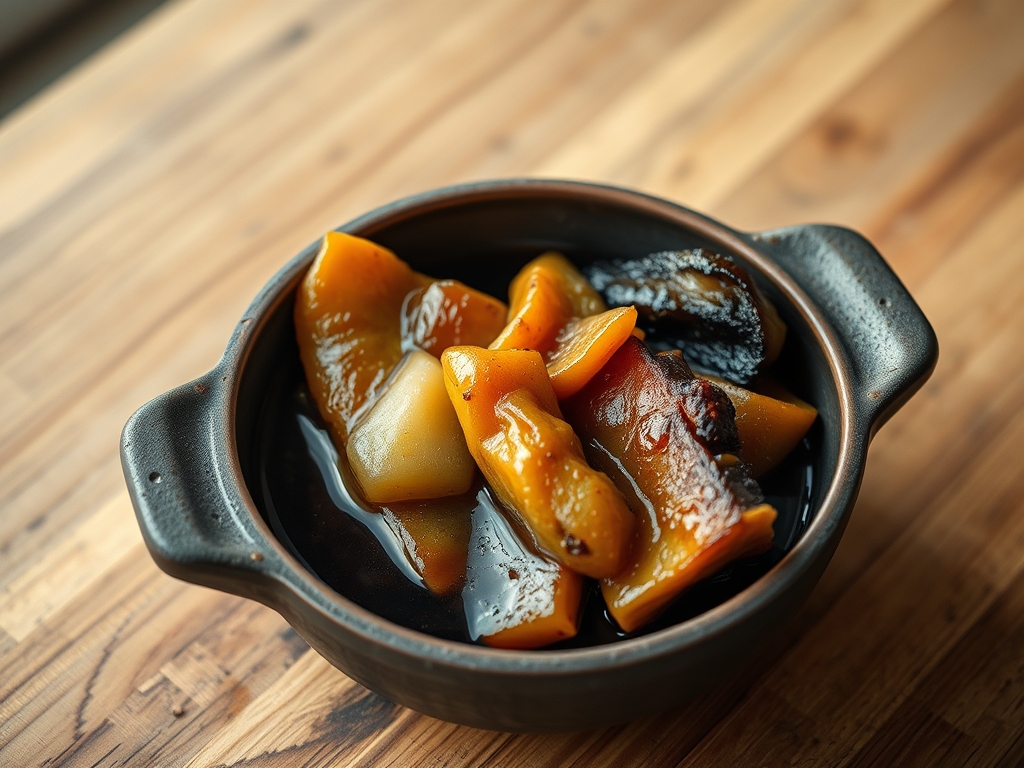
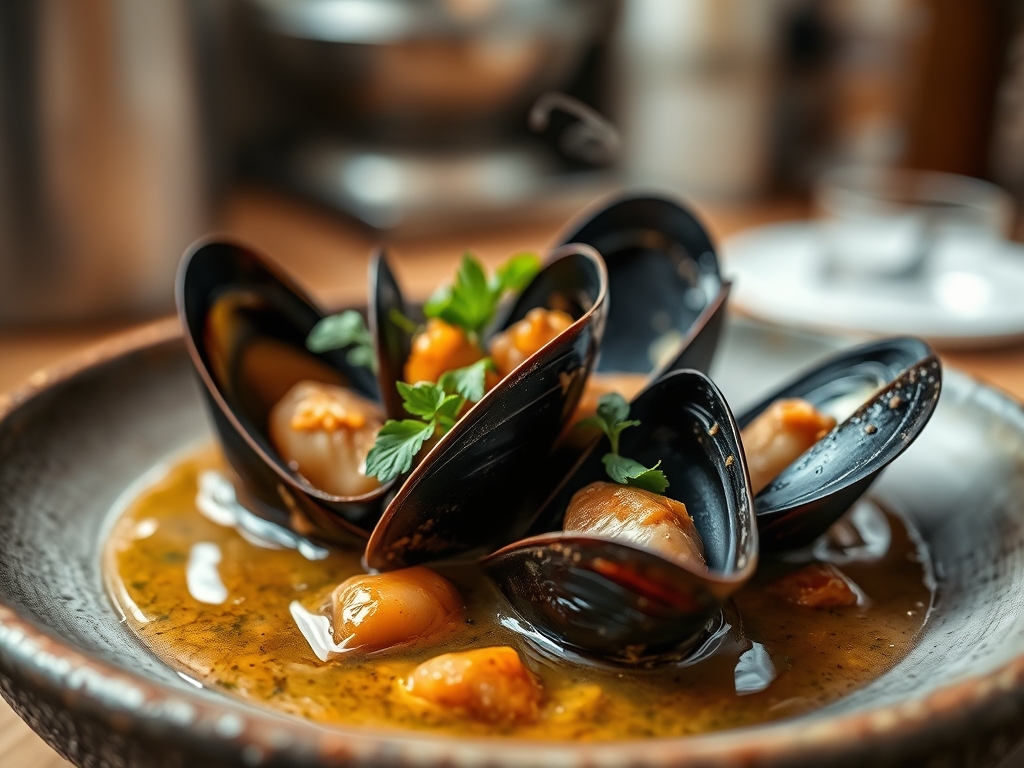
Listen up, culinary engineers. We are not merely boiling water; we are conducting a high-stakes extraction of marine glycogen and oceanic minerals. The goal is a liquid gold that vibrates with the essence of the tide. When we talk about Mussel Broth Clarity, we are discussing the difference between a murky, amateur puddle and a crystalline, refractive masterpiece that would make a laboratory technician weep with joy. The sensory profile is a violent collision of saline punch and aromatic finesse. You want that hit of umami to register on the Richter scale before the first drop even hits the palate. Achieving this level of purity requires more than just heat; it requires a ruthless commitment to filtration and temperature management. We are hunting for a liquid that is visually translucent yet structurally dense with dissolved proteins and lipids. If your broth looks like dishwater, you have failed the audit. If it glows with the intensity of a polished amber gem, you have mastered the art of the bivalve infusion. Let us begin the protocol.
THE DATA MATRIX
| Metric | Specification |
|---|---|
| Prep Time | 20 Minutes |
| Execution Time | 15 Minutes |
| Yield | 1.2 Liters / 5 Cups |
| Complexity (1-10) | 7 |
| Estimated Cost per Serving | $4.50 |
THE GATHERS
Ingredient Protocol:
- 2 kg / 4.4 lbs Fresh Live Mussels (scrubbed and debearded)
- 500 ml / 2 cups Dry White Wine (preferably Sauvignon Blanc or Muscadet)
- 100 g / 7 tbsp Unsalted High-Fat Butter
- 4 Large Shallots (minced)
- 6 Cloves Garlic (microplaned)
- 10 g / 2 tsp Sea Salt (adjust based on mussel salinity)
- 5 g / 1 tsp White Peppercorns (crushed)
- 30 g / 1 bunch Flat-Leaf Parsley (stems and leaves separated)
- 250 ml / 1 cup Cold Filtered Water (for thermal shock)
Section A: Ingredient Quality Audit:
The primary failure point in any seafood extraction is the raw material. If your mussels are gaping and refuse to close when tapped, they are biologically compromised; discard them immediately to avoid sulfurous contamination. If your wine is overly oaky or sweet, it will muddy the Mussel Broth Clarity and introduce cloying notes that fight the brine. Technical fix: Use a high-acid, bone-dry wine to deglaze the pan. This acidity acts as a surfactant, helping to lift the proteins and stabilize the emulsion. If the shallots are sprouting green hearts, remove them; those sprouts contain bitter alkaloids that will pierce through your delicate flavor profile.
THE MASTERCLASS
Step 1: The Aromatic Foundation
Place your heavy-bottomed saucier over medium heat and render the butter until it stops foaming. Add the minced shallots and garlic. You are looking for translucency, not browning.
Pro Tip: Use a digital scale to ensure your aromatics are balanced; too much garlic will overwhelm the delicate glycogen sweetness, while too little leaves the broth one-dimensional.
Step 2: The High-Heat Deglaze
Increase the heat to high. Once the aromatics are shimmering, introduce the mussels all at once. Immediately deglaze with the white wine. The sudden thermal shift initiates a rapid steam release that forces the bivalve shells to snap open.
Pro Tip: A bench scraper is excellent for moving large quantities of mussels quickly from the prep station to the pot without losing precious juices.
Step 3: The Thermal Extraction
Cover the pot tightly for 3 to 4 minutes. As the mussels open, they release their liquor, a highly concentrated saline solution. This is the core of your broth. Add the cold filtered water now to infuse the liquid without overcooking the delicate flesh.
Pro Tip: The science of "thermal shock" with cold water helps to precipitate larger proteins, which is essential for maintaining Mussel Broth Clarity during the final strain.
Step 4: The Precision Filtration
Remove the mussels with slotted tongs. Pour the remaining liquid through a chinois lined with a coffee filter or fine muslin cloth into a clean vessel. This removes all grit, shell fragments, and coagulated proteins.
Pro Tip: Do not press down on the solids in the strainer. Let gravity do the work; mechanical pressure will force particulates through the mesh and ruin your visual transparency.
Section B: Prep & Timing Fault-Lines:
The most common human error is over-extraction. If you leave the mussels in the boiling liquid for more than five minutes, the proteins tighten and become rubbery, while the broth takes on a cloudy, milky appearance. Use a digital timer. If your temperature is too low during the initial deglaze, the mussels will simmer rather than steam, leading to a "muted" flavor profile. Ensure the saucier is radiating significant heat before the wine hits the metal.
THE VISUAL SPECTRUM
Section C: Thermal & Visual Troubleshooting:
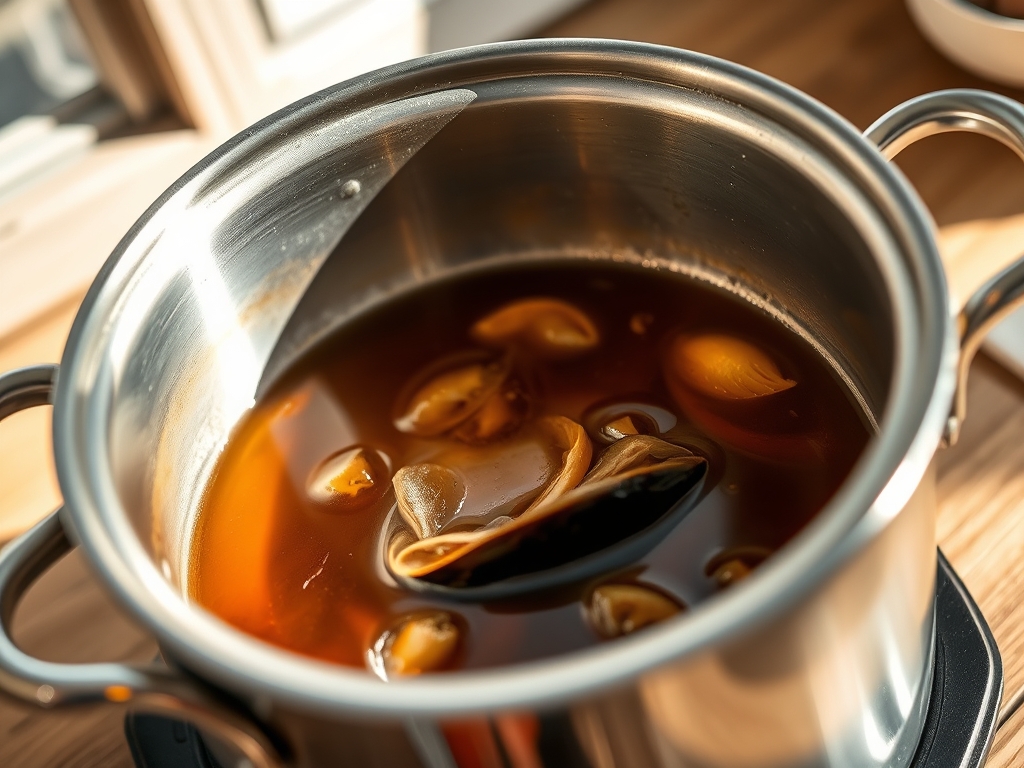
Look at the Masterclass photo above. Notice the lack of sediment at the bottom of the bowl and the way the light passes through the liquid. If your broth appears "flat" or grey, your aromatics likely scorched during the initial phase; you must sweat them lower and slower. If the liquid is opaque, you skipped the fine-mesh filtration or allowed the broth to reach a rolling boil after the mussels were removed. A rolling boil emulsifies fats and solids, destroying Mussel Broth Clarity. To fix a cloudy broth, you can perform a "protein raft" technique using whisked egg whites to gather impurities, though prevention is always superior to the cure.
THE DEEP DIVE
Macro Nutrition Profile:
This broth is an umami powerhouse with a lean profile. Per 250ml serving: 120 Calories, 8g Fat, 4g Carbohydrates, 10g Protein. It is exceptionally high in Vitamin B12 and Manganese.
Dietary Swaps:
- Vegan: Replace mussels with dried shiitake mushrooms and kombu for a "sea-style" dashi; use vegan butter or neutral oil.
- Keto: This recipe is naturally keto-compliant; ensure the wine is bone-dry to minimize residual sugars.
- GF: Naturally gluten-free. Ensure your wine source does not use wheat-based fining agents.
Meal Prep & Reheating Science:
To maintain the molecular structure, do not boil the broth when reheating. High heat will cause the delicate fats to separate and the aromatics to volatilize, leaving you with a dull liquid. Reheat gently to 70C (158F). For long-term storage, freeze the broth in silicone molds. The high salt content acts as a natural preservative, but for peak Mussel Broth Clarity, consumption within 48 hours is advised.
THE KITCHEN TABLE
Why is my broth salty even without added salt?
Mussels hold natural seawater in their shells. This "liquor" is intensely saline. Always taste your broth before adding supplemental sea salt; usually, the natural brine provides all the sodium required for a balanced profile.
Can I use frozen mussels for this?
You can, but expect a sacrifice in clarity. Frozen mussels often leak more cellular fluid (purge) upon thawing, which contains denatured proteins that cloud the broth. If using frozen, increase your filtration efforts significantly.
What is the best way to "debeard" a mussel?
Grip the fibrous "beard" (the byssus threads) and pull sharply toward the hinge of the mussel. Doing this in the opposite direction can tear the internal muscle, causing the mussel to die prematurely and leak fluids.
My broth is too thin. How do I add body?
To increase the viscous quality without losing clarity, whisk in a small amount of cold butter (monter au beurre) at the very end over low heat. This creates a light emulsion that coats the palate beautifully.