The kitchen is a laboratory of volatile aromatics where the difference between a culinary masterpiece and a bland disappointment rests entirely upon Truffle Salt Integrity. You are not just seasoning a dish; you are managing a complex mineral-lipid interface. When that jar of salt is cracked open, a cloud of 2,4-dithiapentane surges forth, seeking a fat molecule to call home. If your salt is stale or your application is poorly timed, those expensive earthy notes vanish into the extraction fan before they ever hit the palate. This audit focuses on the structural marriage of high-grade sodium chloride and the elusive fungal essence of the tuber melanosporum. We are looking for that perfect, lingering finish that coats the tongue and haunts the senses. To achieve this, we must treat every grain as a delivery vehicle for flavor. We will analyze the moisture content, the crystal geometry, and the thermal thresholds required to ensure your Truffle Salt Integrity remains uncompromised from the first pinch to the final bite.
THE DATA MATRIX
| Metric | Specification |
|---|---|
| Prep Time | 15 Minutes |
| Execution Time | 25 Minutes |
| Yield | 4 Servings |
| Complexity (1-10) | 4 |
| Estimated Cost per Serving | $8.50 |
THE GATHERS
Ingredient Protocol:
- 500g / 1.1 lbs Yukon Gold Potatoes (High starch for maximum adhesion)
- 60ml / 4 tbsp Unsalted European Style Butter (82 percent butterfat)
- 15ml / 1 tbsp Cold-Pressed Extra Virgin Olive Oil
- 10g / 2 tsp Premium Black Truffle Salt (The core of Truffle Salt Integrity)
- 5g / 1 tsp Fresh Chives, finely minced
- 2g / 0.5 tsp Freshly Cracked White Peppercorns
Section A: Ingredient Quality Audit:
If your truffle salt smells like metallic chemicals rather than damp earth and musk, the synthetic flavoring has oxidized. To fix a subpar salt, do not toss it; instead, infuse it by placing a small piece of dried porcini mushroom in the jar for forty-eight hours to bolster the umami profile. If your potatoes feel soft or sprout-heavy, the starch has converted to sugar, which will lead to a limp texture. To rectify this, soak the sliced tubers in ice-cold water for thirty minutes to render excess surface sugars and restore turgidity. Always use high-fat butter; lower-quality options contain too much water, which will steam the potatoes rather than crisping them, ultimately dissolving your salt crystals prematurely.
THE MASTERCLASS
1. Precision Slicing and Starch Management
Utilize a sharp mandoline or a heavy chef knife to slice the potatoes into uniform 3mm discs. Immediately submerge them in a stainless steel mixing bowl filled with cold water. This process removes surface starch that would otherwise cause the slices to stick together in a gummy mass.
Pro Tip: Use a digital scale to ensure every potato batch is identical in weight. This consistency allows for uniform heat distribution during the frying phase, preventing some slices from burning while others remain raw.
2. Thermal Preparation and Lipid Fusion
Place a heavy-bottomed saucier or cast-iron skillet over medium-high heat. Add the olive oil and butter simultaneously. The oil raises the smoke point of the butter, allowing you to achieve a higher temperature without burning the milk solids. Wait for the butter to stop foaming; this indicates the water has evaporated.
Pro Tip: Use an infrared thermometer to verify the oil has reached 175C (350F). Maintaining this specific thermal window ensures that the potato exterior undergoes the Maillard reaction instantly, creating a protective crust that prevents oil saturation.
3. Controlled Sauté and Aeration
Add the potatoes to the pan in a single layer. Use a bench scraper or a metal spatula to move the slices frequently. You want to aerate the pan by tossing the potatoes, ensuring that every surface area is exposed to the hot lipids. This creates a crisp, golden exterior while the interior remains fluffy.
Pro Tip: Do not add the salt yet. Introducing salt too early draws out moisture through osmosis, which creates steam and ruins the structural crispness you are working so hard to build.
4. The Adhesion Phase
Once the potatoes are deep golden brown, remove them from the heat and transfer them to a warm stainless steel bowl. While the potatoes are still glistening with a thin film of hot oil, sprinkle the truffle salt from a height of twelve inches. This ensures an even distribution of minerals across the entire batch.
Pro Tip: The residual heat (around 60C) is the "sweet spot" for Truffle Salt Integrity. It is hot enough to slightly melt the salt into the surface oils but cool enough to prevent the delicate truffle aromatics from evaporating.
Section B: Prep & Timing Fault-Lines:
The most common failure in this protocol is "Thermal Lag." If you crowd the pan, the temperature drops precipitously, leading to a viscous, greasy mess. If you notice the oil bubbling weakly, remove half the potatoes immediately and work in smaller batches. Another timing error occurs during the seasoning phase. If the potatoes cool too much before salting, the crystals will not adhere and will simply fall to the bottom of the bowl. If this happens, a microscopic spritz of truffle oil can act as a "glue" to re-establish the bond.
THE VISUAL SPECTRUM
Section C: Thermal & Visual Troubleshooting:
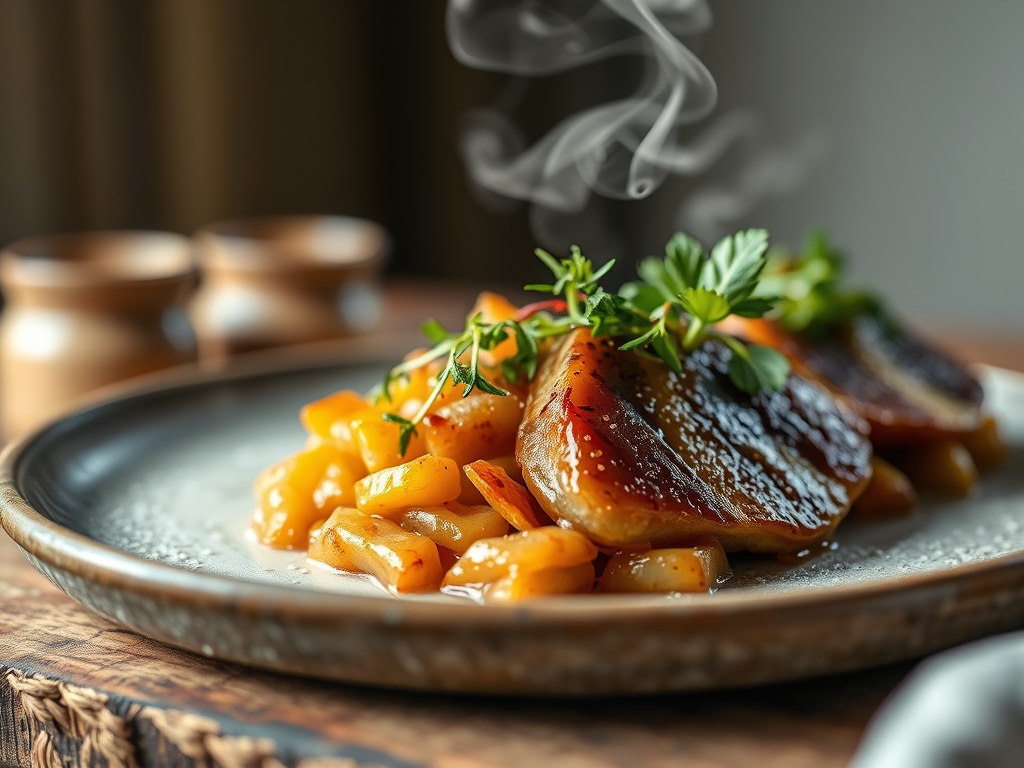
Look closely at the Masterclass photo above. You should see a "Sun-Kissed Bronze" hue on the edges of the potatoes with a pale, creamy center. If your potatoes look dull or grey, you likely skipped the cold-water soak, allowing surface starches to oxidize. If the browning is uneven or speckled with black dots, your pan was too hot, causing the butter solids to burn. The salt crystals should be visible as tiny, glistening diamonds on the surface; they should not be dissolved. If the salt has disappeared, your potatoes were too wet when they hit the oil. To fix a dull appearance, a final toss with fresh, bright green chives provides a piquant visual contrast that signals freshness to the diner.
THE DEEP DIVE
Macro Nutrition Profile
Per serving, this dish provides approximately 280 calories. The breakdown is roughly 32g of carbohydrates, 16g of fats (primarily monounsaturated and saturated), and 3g of protein. While sodium levels are higher due to the finishing salt, the intense flavor of the truffle salt often allows you to use less total salt than you would with standard table varieties.
Dietary Swaps
- Vegan: Replace the European butter with a high-quality cashew-based butter or increase the olive oil ratio. Ensure the vegan butter has a low water content to maintain crispness.
- Keto: Swap the potatoes for roasted cauliflower florets or sliced radishes. The radishes lose their peppery bite when sautéed and mimic the texture of a potato remarkably well.
- Gluten-Free: This recipe is naturally gluten-free, but always audit your truffle salt labels to ensure no anti-caking agents containing grain by-products were used.
Meal Prep & Reheating Science
Truffle salt dishes are notoriously difficult to reheat because the aromatics are so volatile. To maintain molecular structure, avoid the microwave at all costs; it will turn the potatoes into rubber. Instead, use an air fryer or a hot oven at 200C (400F) for three minutes. This flash-heating restores the crispness of the lipids. If the truffle aroma has faded, add a tiny "booster pinch" of fresh salt after reheating to restore the sensory profile.
THE KITCHEN TABLE
Why does my truffle salt lose its smell after a month?
Truffle compounds are highly volatile. To preserve Truffle Salt Integrity, store the jar in a cool, dark place and ensure the lid is airtight. Avoid shaking the jar over a steaming pot, as moisture will enter and degrade the aromatics.
Can I use truffle oil instead of truffle salt?
You can, but the texture changes. Truffle oil adds lipids, while salt adds mineral structure and "pop." For the best results, use the salt as a finishing touch and the oil only if you need an extra punch of scent.
What is the best potato for this audit?
Yukon Golds are the gold standard. They possess a medium starch content that provides a creamy interior while still allowing for a crisp exterior. Russets are too floury, and red potatoes are too waxy for optimal salt adhesion.
How do I know if I have over-salted?
The palate should experience the truffle first, followed by the savory salt, and finally the buttery potato. If the salt stings the tongue or masks the earthy truffle notes, your ratio is off. Balance it with a squeeze of lemon.