Forget the romanticized notion of a slow Sunday dinner; we are here to discuss a high-stakes structural engineering project involving collagen, heat, and complex polyphenols. When you set out to create Red Wine Short Ribs, you are not just cooking; you are conducting a multi-hour audit of protein denaturation. The goal is a result so tender it collapses under the weight of a stern look, yet remains encased in a sauce with the viscosity of liquid velvet. We are looking for that specific point where the connective tissue transforms into gelatin, creating a mouthfeel that is both decadent and technically precise. This is the intersection of rustic comfort and molecular precision. If your braising liquid looks like thin purple water or your beef has the texture of wet wool, you have failed the audit. We demand a deep, mahogany crust and a sauce that coats the back of a spoon with absolute authority. Let us strip away the fluff and look at the raw data required to execute this culinary masterpiece.
THE DATA MATRIX
| Metric | Specification |
|---|---|
| Prep Time | 45 Minutes |
| Execution Time | 4.5 Hours |
| Yield | 4 to 6 Servings |
| Complexity | 7 / 10 |
| Estimated Cost per Serving | $12.50 – $18.00 |
THE GATHERS
Ingredient Protocol:
- 2.25 kg / 5 lbs English-Cut Beef Short Ribs (Bone-in)
- 750 ml / 1 bottle Dry Red Wine (Cabernet or Syrah)
- 500 ml / 2 cups Fortified Beef Bone Broth
- 45 ml / 3 tbsp Neutral High-Smoke Point Oil
- 200 g / 1.5 cups Yellow Onion (Small dice)
- 150 g / 1 cup Carrots (Small dice)
- 100 g / 0.75 cup Celery (Small dice)
- 45 g / 3 tbsp Tomato Paste
- 4 cloves Fresh Garlic (Smashed)
- 3 branches Fresh Thyme
- 2 branches Fresh Rosemary
- 2 leaves Dried Bay Laurel
- 15 g / 1 tbsp Kosher Salt
- 5 g / 1 tsp Coarse Black Pepper
Section A: Ingredient Quality Audit:
The primary failure point in this protocol is the selection of sub-par protein. If your ribs lack intramuscular fat (marbling), the final result will be stringy and dry regardless of your technique. Fix: Inspect the "eye" of the rib; it should look like a topographical map of fat deposits. Another common error is using "cooking wine" which is loaded with sodium and lacks the necessary tannin structure. Fix: Use a wine you would actually drink. The acidity is vital to balance the heavy lipids. If your aromatics are wilted, their volatile oils have dissipated. Fix: Refresh limp carrots or celery in an ice bath for 20 minutes before dicing to restore cellular turgor pressure.
THE MASTERCLASS
1. The Maillard Foundation
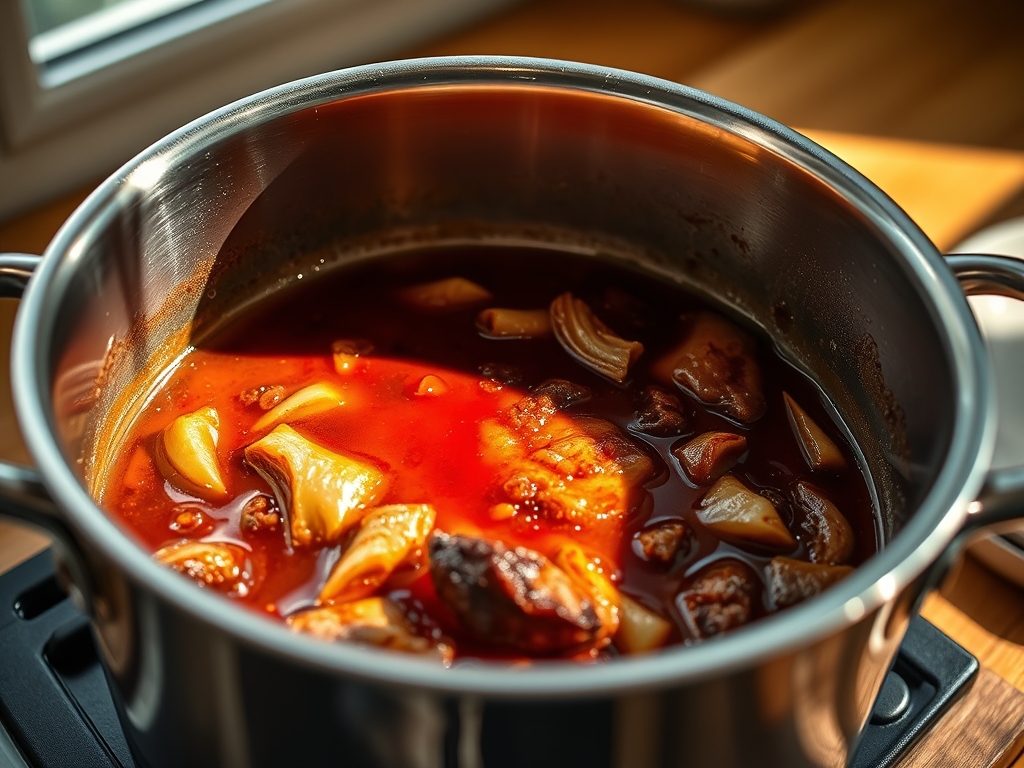
Pat the ribs bone-dry with paper towels. Season aggressively with salt and pepper. Heat your oil in a heavy-bottomed Dutch oven until it reaches the shimmering point. Sear the ribs in batches, ensuring every surface achieves a dark, mahogany crust.
Pro Tip: Use a digital infrared thermometer to ensure your pan surface is at least 200C (400F). This ensures the Maillard reaction occurs rapidly without overcooking the interior of the meat before the braise even begins.
2. The Mirepoix Audit
Remove the meat and discard all but two tablespoons of the rendered tallow. Add your onions, carrots, and celery. Sauté until the onions are translucent and the edges begin to caramelize. Add the tomato paste and garlic, stirring constantly for two minutes until the paste turns a rusty brick red.
Pro Tip: Use a stainless steel bench scraper to clear the bottom of the pot as you stir. This prevents the sugars in the vegetables from scorching while maximizing the flavor extraction from the fond.
3. Deglazing and Aeration
Pour in the full bottle of red wine. Use a wooden spoon to vigorously scrape the bottom of the pot, releasing the caramelized protein bits (fond) into the liquid. Bring to a boil and reduce the liquid by half.
Pro Tip: As the wine boils, it will aerate and release harsh ethanol vapors. Reducing the wine before adding the stock is essential to concentrate the tartaric acid, which provides the structural backbone of the sauce.
4. The Long-Form Braise
Return the ribs to the pot, nestling them into the vegetables. Add the bone broth until the ribs are two-thirds submerged. Add your herbs. Cover with a tight-fitting lid and place in a 150C (300F) oven for 3 to 3.5 hours.
Pro Tip: Use a saucier or a heavy Dutch oven with a self-basting lid. The spikes on the underside of the lid allow moisture to drip back onto the meat evenly, preventing the top of the ribs from drying out during the long thermal cycle.
5. The Emulsification Finish
Remove the ribs carefully. Strain the braising liquid through a fine-mesh sieve into a clean saucepan. Discard the solids. Simmer the liquid until it reduces to a viscous glaze. Whisk in a knob of cold butter for a glossy finish.
Pro Tip: Use a digital scale to weigh your final sauce yield. For the perfect consistency, you want to reduce the liquid until it reaches approximately 25 percent of its original volume. This concentrates the natural gelatin for a superior mouthfeel.
Section B: Prep & Timing Fault-Lines:
The most common human error is the "Rushing the Render" syndrome. If you pull the ribs out at the 2-hour mark because you are hungry, the collagen hasn't had time to convert to gelatin. The result will be tough and rubbery. Use a probe thermometer; the internal temperature should be roughly 95C (203F). Conversely, if the oven temperature is too high, the exterior fibers will tighten and squeeze out all moisture before the interior can soften. Maintain a low, steady thermal environment.
THE VISUAL SPECTRUM
Section C: Thermal & Visual Troubleshooting:
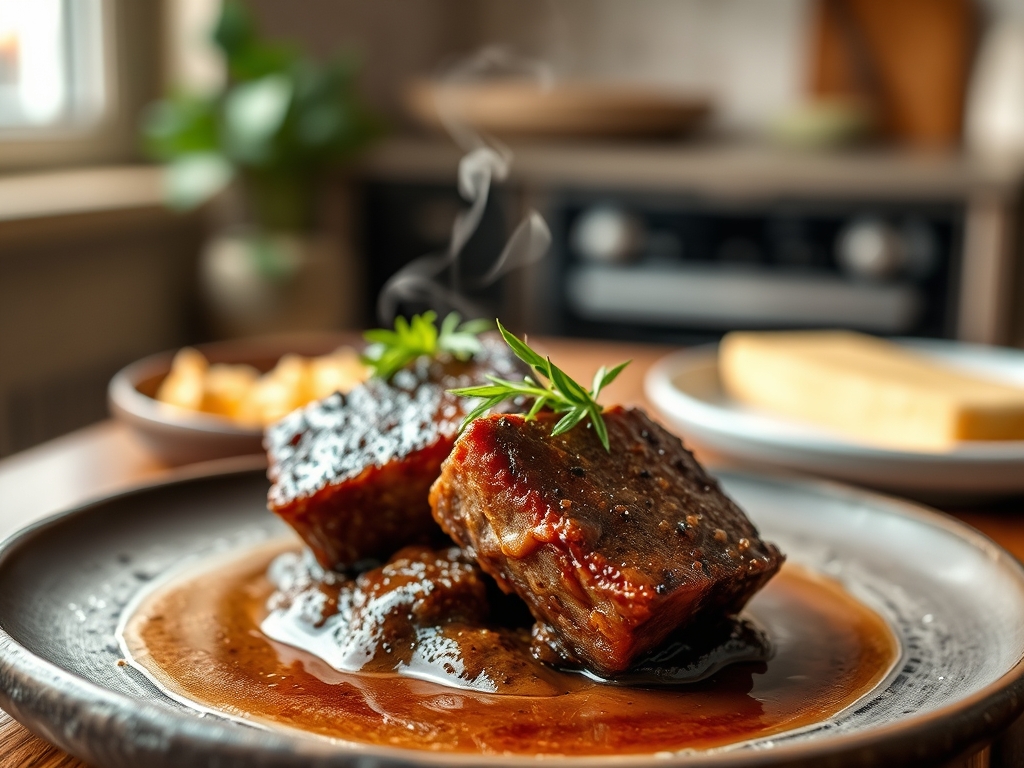
Referencing the Masterclass photo, your Red Wine Short Ribs should exhibit a deep, uniform color. If your ribs look grey or pale, your initial sear was insufficient; you cannot fix color once the liquid is added. If the sauce looks "broken" or oily, the fat was not properly skimmed. Fix: Use a fat separator or a chilled spoon to remove the surface lipids before the final reduction. If the meat is falling off the bone in messy shreds rather than holding its shape, you have over-braised. The visual cue for perfection is a rib that stays intact on the plate but yields to a fork with zero resistance.
THE DEEP DIVE
Macro Nutrition Profile
A standard serving (approx. 250g of meat plus sauce) contains roughly 650 calories. This breaks down into 45g of protein, 42g of fat, and 12g of carbohydrates (mostly from the wine reduction and aromatics). It is a high-density fuel source rich in iron and zinc.
Dietary Swaps
- Keto: Eliminate the carrots and use a dry, low-residual sugar wine. Replace the tomato paste with a small amount of tomato puree.
- GF: This recipe is naturally gluten-free provided your beef broth is certified. Avoid using flour for thickening; rely solely on reduction.
- Vegan: Replace the beef with large "steaks" of Lion's Mane mushroom or thick-cut cauliflower. Use a rich vegetable demi-glace instead of beef broth.
Meal Prep & Reheating Science
These ribs actually improve after 24 hours. As they cool, the gelatin sets into a semi-solid matrix, further infusing the meat with the wine's aromatics. To reheat, do not use a microwave; it will turn the protein into leather. Instead, place the ribs and sauce in a covered dish at 135C (275F) until the internal temperature reaches 74C (165F). This preserves the molecular integrity of the fats and proteins.
THE KITCHEN TABLE
Why is my sauce bitter?
This usually stems from burning the tomato paste or using a wine with too many tannins. Balance the bitterness with a tiny pinch of sugar or a teaspoon of balsamic vinegar to brighten the profile.
Can I use a slow cooker?
Yes, but you must perform the sear and the wine reduction on the stovetop first. If you dump raw ingredients into a slow cooker, you will lose the depth of flavor provided by the Maillard reaction.
Why did my meat shrink so much?
Short ribs have a high fat and water content. Significant shrinkage is normal as the fats render and the connective tissues tighten. Expect a 30 to 40 percent reduction in size.
What is the best side dish for this?
You need a starch to absorb the piquant sauce. A buttery parsnip puree or classic polenta provides a smooth textural contrast to the fibrous richness of the beef.
My sauce won't thicken, what now?
If the sauce remains thin after reduction, you may have used a broth with low gelatin content. Fix: Whisk in a small "beurre manie" (equal parts softened butter and flour) and simmer for two minutes.