Forget everything you know about the timid sizzle of a suburban backyard grill. We are entering the realm of high-velocity thermal engineering where the goal is nothing less than the structural transformation of bovine tissue. Blackened Ribeye Searing is not a cooking method; it is a controlled demolition of intramuscular lipids followed by a rapid reconstruction of flavor through the Maillard reaction. When that heavy-gauge cast iron meets a dry-aged ribeye, you are initiating a chemical cascade that turns amino acids and reducing sugars into a complex crust of savory depth. We want a surface that looks like volcanic glass but yields to a center that remains a vibrant, edge-to-edge medium-rare. This process requires an uncompromising commitment to heat management and surface moisture control. If your kitchen does not smell like a forge and your smoke alarm isn't eyeing the exit, you aren't doing it right. We are here to render fat into liquid gold and infuse the muscle fibers with a piquant blend of spices that carbonize into a legendary crust.
THE DATA MATRIX
| Metric | Specification |
|---|---|
| Prep Time | 45 Minutes (includes tempering) |
| Execution Time | 12 Minutes |
| Yield | 2 Servings |
| Complexity | 8 / 10 |
| Estimated Cost per Serving | $35.00 – $55.00 |
THE GATHERS
Ingredient Protocol:
- 2 Bone-in Ribeye Steaks (approx. 900g / 32oz total); minimum 1.5 inches thick.
- 60g / 4 tbsp Unsalted High-Butterfat Butter.
- 30ml / 2 tbsp Avocado Oil (High Smoke Point).
- 15g / 1 tbsp Smoked Paprika.
- 10g / 2 tsp Cayenne Pepper.
- 10g / 2 tsp Garlic Powder.
- 10g / 2 tsp Onion Powder.
- 15g / 1 tbsp Coarse Kosher Salt.
- 10g / 2 tsp Cracked Black Peppercorns.
- 3 Sprigs Fresh Thyme.
- 2 Cloves Crushed Garlic.
Section A: Ingredient Quality Audit:
The primary failure point in Blackened Ribeye Searing is moisture. If your steak arrives in a vacuum-sealed bag sitting in a pool of myoglobin, the surface is compromised. Technical Fix: Place the steak on a wire rack over a sheet pan and refrigerate uncovered for 24 hours. This "dry-brining" uses salt to draw moisture out and then pull the seasoned brine back into the muscle, while the air circulation dehydrates the surface for a superior crust. If your spices are dull or clumped, they have oxidized. Toast whole peppercorns in a dry pan before grinding to reactivate their volatile oils. Use a digital scale to ensure the salt-to-spice ratio is exact; guessing leads to a crust that is either chemically bitter or structurally weak.
THE MASTERCLASS
Step 1: The Thermal Tempering Phase
Remove the steaks from the refrigerator 45 minutes before cooking. Pat them aggressively dry with lint-free towels. Apply the spice rub only after the surface is bone-dry. Use your hands to press the spices into the meat, ensuring full coverage on the edges.
Pro Tip: Tempering allows the internal temperature to rise slightly, which prevents the "blue" center and gray band effect. Use a digital scale to weigh your spice blend for consistency across both steaks.
Step 2: The High-Velocity Sear
Heat a heavy cast-iron skillet until it reaches 500 degrees Fahrenheit (260 Celsius). Add the avocado oil; it should shimmer and move like water. Lay the steak away from you to avoid splatter. Press down firmly with a bench scraper or a heavy press to ensure maximum surface contact.
Pro Tip: The viscous nature of the oil at high heat ensures even heat distribution across the microscopic valleys of the meat surface. This maximizes the Maillard reaction across the entire face of the ribeye.
Step 3: Intramuscular Lipid Rendering
Flip the steak after 3 to 4 minutes once a dark, mahogany crust has formed. Immediately add the butter, garlic, and thyme to the pan. As the butter foams, tilt the pan and use a large spoon to infuse the meat with the hot fat.
Pro Tip: Using a saucier-style spooning technique, known as "arroser," continuously bathes the top surface in 300-degree fat. This creates a secondary layer of flavor while the bottom side finishes its sear.
Step 4: The Rest and Redistribution
Remove the steak when the internal temperature hits 125 degrees Fahrenheit (52 Celsius). Transfer to a warm plate and pour the remaining pan juices over it. Let it rest for at least 10 minutes.
Pro Tip: Resting allows the muscle fibers to relax and reabsorb the viscous juices. If you cut too soon, the internal pressure will force the moisture out, leaving you with a dry, gray steak.
Section B: Prep & Timing Fault-Lines:
The most common human error is "pan-crowding." If you put two massive ribeyes in a small skillet, the pan temperature drops instantly, and the steaks will steam rather than sear. Technical Fix: If your hardware cannot maintain 500 degrees, sear the steaks one at a time. Another fault-line is the "butter burn." If you add butter too early, the milk solids will carbonize into acrid soot. Always wait until the final two minutes of cooking to introduce dairy. Use an infrared thermometer to verify pan surface temperature before the meat makes contact.
THE VISUAL SPECTRUM
Section C: Thermal & Visual Troubleshooting:
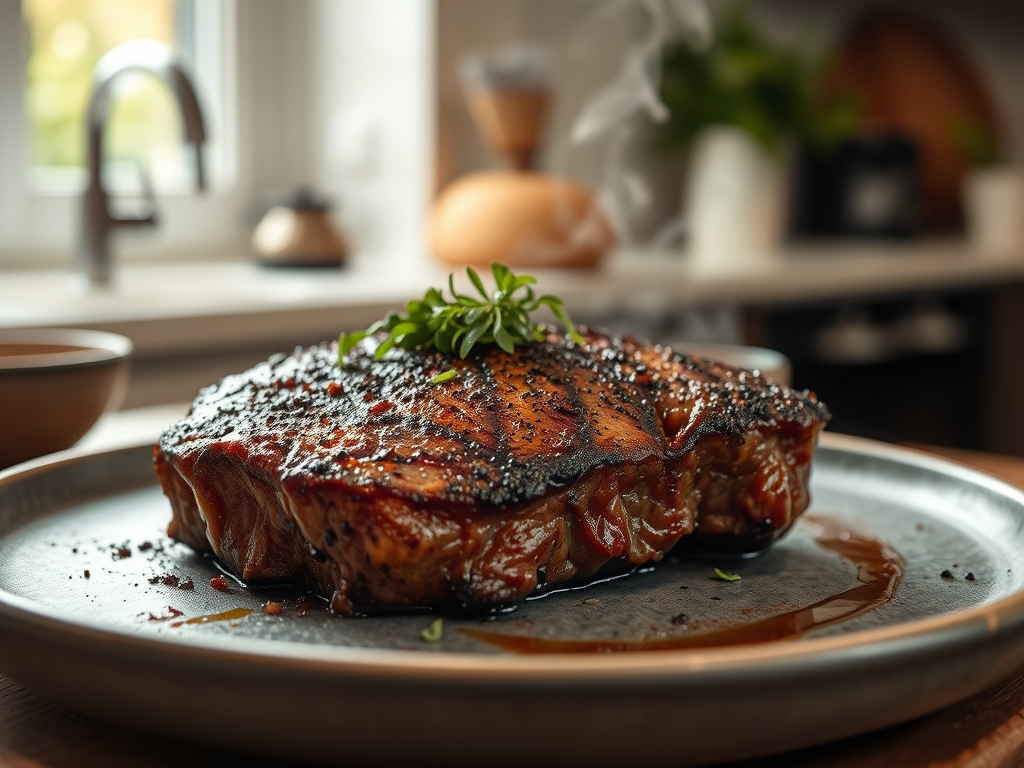
Referencing the Masterclass photo, your steak should exhibit a deep, matte-black finish with highlights of glistening rendered fat. If your steak looks gray or "wet," your pan was not hot enough or the meat was too cold. If the spices are black but the meat underneath is raw, your heat was too high; move the pan to a cooler zone or finish in a 400-degree oven. The "Visual Cue" for a perfect render is the fat cap; it should be translucent and soft, not white and rubbery. If the crust is flaking off, you likely used too much oil or didn't press the spices firmly enough into the protein matrix during the prep phase.
THE DEEP DIVE
Macro Nutrition Profile:
A standard 16oz serving of blackened ribeye provides approximately 1,100 calories. This includes 85g of protein and 80g of fat. While high in saturated fats, the intramuscular lipids provide essential fat-soluble vitamins and high bioavailability of zinc and iron.
Dietary Swaps:
- Vegan: Replace ribeye with thick-cut "steaks" of Lion's Mane mushroom. Use vegan butter (oil-based) for the basting phase. The porous structure of the mushroom will infuse with the spices beautifully.
- Keto: This recipe is natively Keto-compliant. Ensure the spice rub does not contain added sugars or cornstarch.
- GF: Naturally gluten-free. Audit your spices to ensure no cross-contamination or anti-caking agents containing gluten.
Meal Prep & Reheating Science:
To maintain the molecular structure when reheating, avoid the microwave at all costs. The microwave agitates water molecules, steaming the meat from the inside out and ruining the crust. Instead, use a "reverse sear" method: heat in a 250-degree oven until the internal temp reaches 110, then flash-sear in a hot pan for 30 seconds per side to aerate and crisp the exterior.
THE KITCHEN TABLE
How do I prevent my kitchen from filling with smoke?
High-heat searing necessitates a high smoke-point oil like avocado or grapeseed. Ensure your hood vent is on maximum or open a window. The "blackened" effect is literally controlled carbonization; smoke is an inevitable byproduct of the process.
Can I use a non-stick pan for this?
Absolutely not. Non-stick coatings decompose and release toxic fumes at the temperatures required for a proper blackened sear. Use cast iron, carbon steel, or heavy-duty stainless steel to ensure even heat retention and safety.
Why is my spice rub bitter?
Bitterness usually stems from burnt garlic powder or low-quality paprika. If the heat is too high for too long, the sugars in the spices char beyond the point of flavor. Control the heat and use fresh, high-quality spices.
Should I cut the fat off before cooking?
Never. The fat cap is the fuel for the flavor. As it heats, it will render and baste the meat. You can trim excess gristle, but the intramuscular fat is what provides the succulent texture.